
The post Introducing PMI’s Corporate Headquarters appeared first on GET TO KNOW PMI.
]]>
Property Management, Inc., we specialize in providing superior property management services — and for us, that starts at home. That's why we're so excited to introduce our new office location at 350 Poplar Church Road in Camp Hill! This new location gives us extra space for our team to comfortably work collaboratively and also have room to grow.
PERKS OF OUR NEW LOCATION
More space is just the beginning of why our new Camp Hill location is the perfect place for us to be. Our top-notch amenities include:
- Beautiful views: We're right across the river from downtown Harrisburg. A glance out our windows will show you the beautiful Susquehanna River and views of Harrisburg City.
- An excellent new cafe: Stay caffeinated and well-fed by visiting our modern cafe, complete with food storage space and snacks and meals available for purchase.
- Outdoor entertaining space: It's the perfect area for informal meetings and fun company events.
CONTACT INFORMATION
Even though our location is changing, we're still the same team. Our phone number remains 717-730-4141, Our mailing address is P.O. Box 8899, Camp Hill, Pa 17001. Our physical address is 350 Poplar Church Rd, Camp Hill, Pa, 17011.
The post Introducing PMI’s Corporate Headquarters appeared first on GET TO KNOW PMI.
]]>The post How Much Should You Spend on Rent appeared first on GET TO KNOW PMI.
]]>
Looking for a new place to rent is an exciting time. Whether you are moving into your first place or looking for something different, you need to know how much rent you can afford. There are a few ways you can work this out. While there is no one-size-fits-all answer to how much you should pay for rent, the 30% rule and the 50/30/20 rule are two methods you can use to determine how much you can afford to spend on rent.
What Is the 30% Rule?
The 30% rule ensures you have enough money to cover expenses such as debt repayments, savings, food, utilities, and entertainment. However, there are two weak points to the 30% rule.
First, it doesn't account for inflation, income stagnation, or rising rent prices. For example, the average rent in the City of Philadelphia was 19% higher in March 2022 than in January 2018. The average hourly wage rate increase at that time was only 2.5%, leaving a gap between renters' wages and rental costs.
Secondly, the 30% rule doesn't consider your situation. Your financial goals, debt repayments, and the average rental prices in the area all impact how much you can spend on rent.
What Is the 50/30/20 Rule?
If you have to spend more than 30% of your income on rent, you might try the 50/30/20 rule instead. This method splits your income into three parts:
- 50% on necessities or essential monthly bills such as groceries and rent
- 30% on non-essential expenses such as going out or other wants
- 20% on savings or debt repayments
The 50/30/20 rule has many benefits. It is simple, doesn't restrict your spending, and can help you reduce fixed costs by showing you exactly where your money is going. There are a few drawbacks to it, though. Like the 30% rule, it doesn't consider your unique circumstances. You might have higher fixed costs because of student debt. Maybe you want to save more money and find 20% isn't enough for your financial goals. Spending 30% of your salary on wants can be a lot. If you make $1,000, you can spend $300 on wants. Keep in mind all of this when creating a monthly budget.
Other Factors to Consider When Renting
You'll want to consider a few additional factors when renting. Every rental community has different requirements. There could be application fees, deposits and other costs to consider. Here are some of the most common expenses to bear in mind:
- Transport costs: If possible, try to find a place as close to your work and other amenities as possible. How long will it take you to get to work or shops? How much will it cost?
- Utilities: Does your rent cover utilities, or are they an extra cost? Keep an eye out for listings that mention if utilities are included. Some rentals might only include certain utilities such as water but not electricity or gas.
- Amenities: These are extras that come along with the rental and can include things like laundry rooms, air conditioning, fitness areas, security, parking, and storage. Some complexes provide these as part of the rent, but it is best to find out if there is an additional cost.
- Deposit and application fees: This can either be one month's rent or the first and last month's rent. If the place is pet friendly, find out if a pet deposit is required. Application fees might also apply.
- Renters insurance: A great option to make sure you cover your property and belongings in the event of theft or a disaster. In some cases, landlords may require you to have renters insurance before you move in, but not all do.
- Signing incentives: Landlords or rental agents often offer discounts or free months to renters to finalize a rental agreement.
Considering all these extras and possible discounts, how do you know how much you are spending on rent each month? The effective rent formula can help. Start with the lease length minus any free months. Multiply that number by the gross rent you pay, including amenities and other fees. Divide this by the full lease length to determine how much you pay each month. Always check with your landlord or rental agent about additional costs and discounts. They may not collect rent for one month instead of working out the effective rent amount and spreading it over your full lease.
Find the Right Rental for You with Property Management, Inc.
Moving into a new home is exciting, and you must consider many factors. There is a lot to plan for, from where you want to live to what you might need for your first apartment kitchen. Creating a budget and knowing how much rent you can afford is the first step in helping you find the right home for you. At Property Management, Inc., we are here to help you every step of the way. Our dedicated team can guide you through working out your rental costs on any of our exceptional properties. Take a look at our rental properties online or consult with our agents by calling 717-730-4141 today!
The post How Much Should You Spend on Rent appeared first on GET TO KNOW PMI.
]]>The post Apartment Kitchen Checklist appeared first on GET TO KNOW PMI.
]]>
Moving into a new apartment is exciting. While there are many different items you can bring along, you’ll want to focus on those you need the most. Whether you're moving into your first apartment or you’ve been living on your own for years, starting with essential kitchen items will ensure a smoother transition into your new home.
To plan your move, read through our commonly asked questions and follow along with our apartment kitchen checklist to stock your kitchen with the most quintessential items.
Apartment Essentials Checklist FAQ
For an easier transition, we’ll provide a few common questions and answers to help you decide what you need for your apartment.
What Do I Need to Move Into My First Apartment?
If you’re moving out of your childhood home for the first time, consider the appliances and amenities included in your apartment before packing to lessen the load.
From there, you can decide what you’ll need as soon as you get to your new apartment while waiting on buying the less essential items for a later time when you’re not so busy. Follow our kitchen essentials list below and create a first apartment checklist that includes bathroom, bedroom, and dining room items.
Bring along anything your family might hand down to you while making use of store deals and coupons in your area for the items you don’t have.
How Much Do I Need to Move Into an Apartment?
You’ll often need to pay a security deposit and the first month's rent before your move-in day. You’ll also want to account for utility bills, groceries, and other monthly expenses. It's always a great idea to budget your money to help you save up for your apartment.
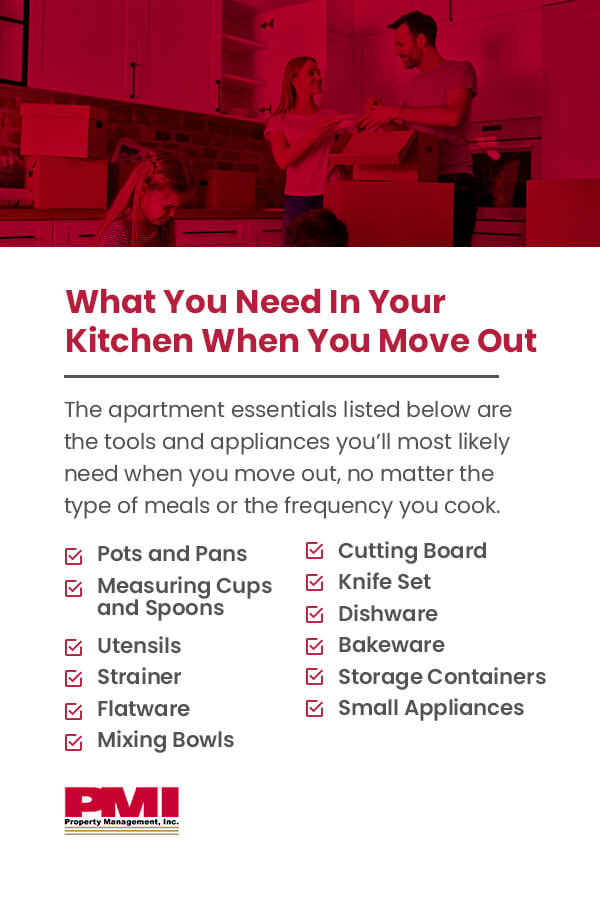
What You Need In Your Kitchen When You Move Out
Follow along with our basic kitchen needs list to help you plan your move. The apartment essentials listed below are the tools and appliances you’ll most likely need when you move out, no matter the type of meals or the frequency you cook.
1. Pots and Pans
You don’t have to be a master chef to need pots and pans in your home. The tools you use determine the meals you cook, and pots and pans provide ease and convenience to help you cook almost anything.
Whether you’re an occasional chef or prepare multiple meals a day, having a variety of pots and pans is an excellent investment. Choose from pots and pans such as:
- Saucepans
- Frying pans
- Skillets
- Casserole dishes
You’ll want a set that includes at least two types of saucepans with lids, two varieties of skillets, and baking casserole dishes. For instance, a frying pan helps fry eggs, while casserole dishes are essential for making mac and cheese or lasagna. The types of cookware sets vary, though you’ll want to choose the one that matches your meal preferences.
2. Measuring Cups and Spoons

Prepware is extremely important, which is why we’ve included measuring cups, mixing bowls, and knives on our list. After all, you’ll need to prepare your food before starting cooking. Measuring cups and spoons help you precisely portion out the ingredients you’ll need for your recipes, so your meals taste fantastic.
Bring a full set of measuring spoons and two sets of measuring cups to your new apartment. One set should include liquid measuring cups with handles and pour spouts. The other set should consist of cups and spoons to correctly measure and level off dry ingredients.
3. Utensils
Whether you place them in a countertop canister or inside a drawer, you’ll want various utensils to cook a variety of meals. The essential utensils include:
- Spatulas
- Tongs
- Ladles
- Large spoons
- Meat mallets
- Vegetable peelers
- Whisks
- Rolling pins
Spatulas, soup ladles, wooden spoons and slotted spoons all come in multiple sizes and materials for your needs. For instance, a nonstick skillet can scratch when you handle it with metal utensils, so bringing wooden and plastic utensils to your new place is great.
Vegetable peelers and meat mallets are excellent options if you love to cook. If you’re more of a baker, whisks and rolling pins will come in handy at your new home.
4. Strainer
Strainers are convenient and crucial for many recipes when you include them in the cooking process. They’re perfect for rinsing and steaming vegetables, for instance. And whether you’re making a light meal such as box macaroni and cheese or a complex Italian dinner, strainers make the ideal tool for draining pasta.
Even bakers can appreciate strainers to sift flour and easily incorporate it into the batter. You can even find smaller strainers that are great for powdering decorative cookies and cakes. The possibilities for recipes are endless when you have a strainer in your kitchen.
5. Flatware
Flatware is vital for any kitchen. You’ll want to stock your kitchen drawers with quality cutlery for eating and dining on your own or with family and friends. You can purchase flatware in different materials, such as stainless steel or sterling silver. Opt for a decorative style or a utilitarian look, depending on your budget and aesthetic preference. Examples include:
- Forks
- Knives
- Spoons
- Butter plates
- Sugar bowls
- Salt and pepper shakers
- Saucers
Butter plates, salt and pepper shakers, and sugar bowls all make excellent flatware choices to bring to your new apartment. Butter plates and containers help keep your butter at room temperature for baking, and you can refill and leave salt and pepper shakers on your kitchen table for added convenience. Pack the saucers for your tea or coffee or a place to rest your sponges or soap. Flatware is a must-have component of any kitchen.
6. Mixing Bowls
Mixing bowls make inexpensive and versatile tools for baking and cooking all types of recipes. Purchase a set of three mixing bowls that fit inside one another to save space and keep them anywhere in your kitchen.
You can choose from stainless steel, glass, plastic or even silicone bowls with tops to save food for later. You can purchase mixing bowls in all colors for an affordable price or search for a set that comes with measuring cups and spoons for even more significant savings.
Mixing bowls are perfect for baking, marinating meat, and making salad dressings, dips, and seasonings. A mixing bowl set is vital for your new kitchen, from desserts to savory meals.
7. Cutting Board
Bring along two cutting boards to your new apartment — one for raw proteins and another for cooked foods and produce. This way, you can avoid cross-contamination and have extra space to cut and prepare your meals.
For cooked foods and produce, plastic or wooden cutting boards will do the trick. Wooden cutting boards are popular since they tend to be very sanitary and lack grooves for germs to gather. At the same time, plastic cutting boards make an easy-to-clean, dishwasher-safe alternative to cut raw meat and keep your knives in good condition.
8. Knife Set
A proper knife set is essential to smoothly prepare meals. You’ll want to have a basic set that includes:
- Serrated knife
- Chef’s knife
- Paring knife
A chef’s knife ranges in size and helps you chop and dice produce or cut into poultry, meat, and fish. A serrated knife is excellent for foods with a hard exterior, such as bread, while a paring knife will help you cut fruits and vegetables. You’ll need knives for almost all meal prep, making them indispensable tools for your new kitchen.
9. Dishware
Dishware is crucial for any kitchen for obvious reasons. You’ll want to be able to serve your guests and eat comfortably with the proper set, including:
- Plates
- Cups
- Mugs
Bring a dishware set that includes small and large plates, serving platters, and bowls. Mix and match colors and designs depending on your style preferences and find affordable dishware almost anywhere.
Remember cup and mug sets and search for dishwasher and microwave-safe options for extra convenience. Glass cups are perfect for preventing leaks that often accompany those red disposable cups. In contrast, mugs are ideal for hot drinks and even easy mug cakes.
10. Bakeware
Many people look to baking to reduce stressand relieve their anxiety. That's why we've added bakeware to the list of items to take to your new apartment. Whether you’re baking a cake or roasting a chicken, it’s vital to have the correct pans for your oven. Types of bakeware include:
- Rectangular baking pan
- Baking sheet
- Round baking pan
- Muffin tin
- Loaf pan
A baking pan or baking sheet makes any meal easier to prepare, while specialty pans for certain meals such as pizza or salmon make an excellent investment.
You can make cookies, roast veggies, bake meats, and roast fish with the proper bakeware. A baking sheet without edges makes it easier to slide off finished cookies, while a baking pan with edges makes moist and rich brownies and desserts.
When you need to whip up birthday cake or muffins, cake pans and muffin tins make the perfect bakeware for your new kitchen. A loaf pan will help you bake and shape up the tastiest bread.
11. Storage Containers
Plastic or glass storage containers with secure lids make a great place to save leftovers or hold onto ingredients. You might use storage containers to keep chopped vegetables fresh to toss into a dish or place unused ingredients from making dinner.
You can find a variety of storage containers in the styles, shapes and sizes you need. Storage with undetachable lids means you’ll never lose another top again. And there are plenty of dishwasher, microwave, and freezer-safe options to keep your food nice and fresh.
Choose from zip-lock or zipper storage bags to store leftovers like pizza or sandwiches. You might even use gallon freezer bags for meal prep and freezing larger dinners for later.
12. Small Appliances
While your new apartment is bound to have the necessary kitchen appliances like a fridge and a dishwasher, you’ll want to stock your new place with the smaller devices you need to make your life easier:
Coffee maker: If you’re like most people, you’ll want a coffee maker to jump-start those early mornings. You might choose a traditional coffee maker with a glass pot or a single-serve coffee maker for smaller kitchens. Don’t forget your coffee beans, cream, sugar, and even syrups for your lattes.
Blender: A blender provides many different uses, making it an essential item for your kitchen. You can choose from different sizes to fit your space — from small to large blenders great for specific recipes. Toss in your favorite vegetables to create a soup or dressing for your salads. Enjoy smoothies, milkshakes, and even salsas or dips with a blender.
Microwave: If your apartment doesn’t include a microwave, you’ll want to invest in one to efficiently heat meals and prepare quick frozen dinners. Microwaves come in different colors and sizes to match your aesthetics and fit your apartment, no matter the space you have to utilize. Search for countertop microwaves that you can place on your counter and easily clean. There are many types of microwaves at prices that fit most budgets.
Toaster: A toaster is great for those mornings when you need to quickly grab your toast and go. It’s also an excellent investment for toasting slices of bread for deli sandwiches, warming bagels, and even heating breakfast pastries. A toaster oven is equally remarkable for heating larger meals and preparing leftover foods from the night before if you have the space.
Mixer: Whether you opt for a large mixer or a hand mixer, baked goods and trendy whipped coffee are so much easier with this essential kitchen appliance. You might use a mixer for kneading dough, creating fluffy cakes, and even stirring up ingredients for some pasta recipes. Place a large mixer and bowl on your countertop or a hand mixer in your drawer to create delicious desserts.
Slow Cooker: A slow cooker is the ideal kitchen appliance for busy people. Simply throw in your dinner ingredients before heading off to work, and your meal will be ready by the time you get home. You can buy a small cooker for yourself or a large one to feed an entire family for days. A slow cooker is an excellent appliance for meal prep and when you don’t have the time to cook during the day.

Tour Our Rentals to Envision Your New Space
Ensure your new kitchen is stocked and ready to go as soon as you move in. Planning and following a checklist of essential kitchen items ensures you have the time to feed yourself while unpacking the rest of your apartment. Envision your new kitchen when you schedule a tour rental with PMI. With 50 years of excellent service to our clients and communities under our belt, PMI is excited to help you find the ideal apartment for your needs. Appreciate 24-hour emergency maintenance, prompt service, online rent payment, and more! Check out our current apartment listings or call 717-730-4141 to schedule your tour today!
The post Apartment Kitchen Checklist appeared first on GET TO KNOW PMI.
]]>The post Off-Campus Housing in Shippensburg appeared first on GET TO KNOW PMI.
]]>
At Bard Townhouses in Shippensburg, PA, you can find spacious townhomes that fit your style and your budget. Enjoy the privacy of your own bedroom, making meals in a large kitchen, and socializing in the living room. With our abundance of amenities and having all utilities included in the price of your rent, you’ll have all of the comforts of home at a great value.
We offer 2, 3, and 4 bedroom townhomes for rent by the bedroom. Bard Townhouses is a rental townhome community for students at Shippensburg University, in the best location — across the street from campus.
Our community is rich with amenities. For students that enjoy outdoor activities, we have a volleyball court and a basketball court within our parklike community settings. We also have a clubhouse which features a large laundry room with a lounge area. Our business center offers several computers with a printer. Our amenities are designed to offer students entertainment, comfortable living, and aid in their academics.
Visit Bard.rentpmi.com for photos, floor plans, and details about Bard Townhouses in Shippensburg, PA. Bard Townhouses is professionally managed by Property Management, Inc.
The post Off-Campus Housing in Shippensburg appeared first on GET TO KNOW PMI.
]]>The post Renting a One-Bedroom vs. Studio Apartment appeared first on GET TO KNOW PMI.
]]>
Renting a One-Bedroom vs. Studio Apartment
If you're apartment searching, you've likely seen the terms "one bedroom" and "studio apartment" in many local listings. But what's the difference? People often use these terms interchangeably. However, each has unique features that may influence your apartment search. Consider the pros and cons of one-bedroom and studio apartments before making your final decision.
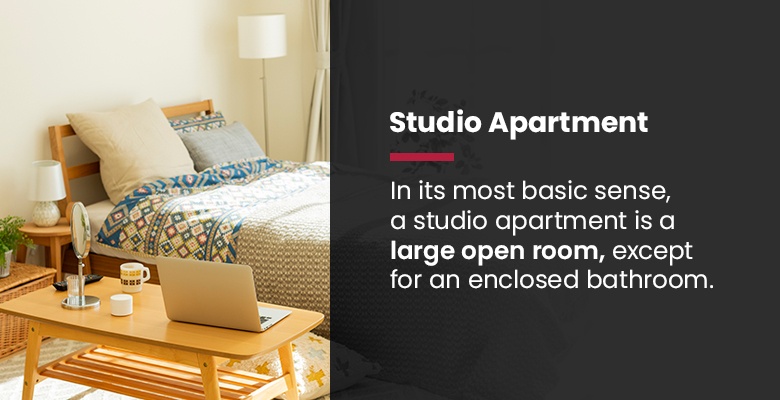
What Is a Studio Apartment?
In its most basic sense, a studio apartment is a large open room, except for an enclosed bathroom. Somewhere within the room is a kitchenette, outfitted with the basic kitchen necessities.
Other apartment types have one or more rooms, like a bedroom or office, but a studio apartment is an all-in-one room. The only doors are a front door, bathroom door, and a balcony door on occasion. You can still have designated bedroom and living areas, depending on how you furnish your apartment.
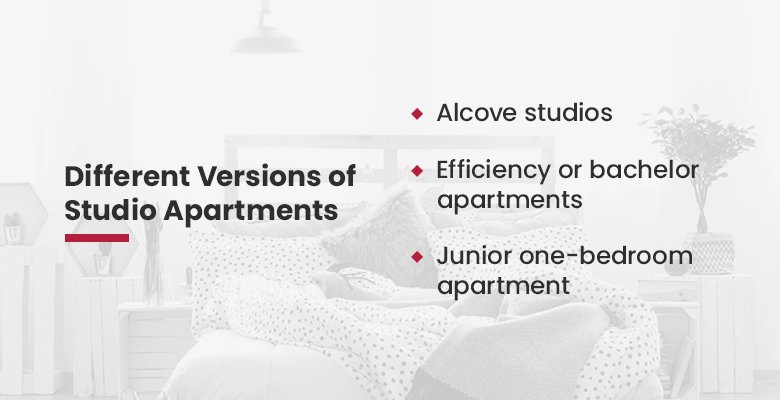
Different Versions of Studio Apartments
To be considered a studio apartment, no walls should completely divide the living space into multiple rooms besides the bathroom. Architects can manipulate the studio apartment layout to create different versions, including:
-
Alcove studios: In a typical studio apartment, residents use dividers to separate their bedroom from other living areas. In an alcove studio, architects design a division for you. Alcove studio layouts have a designated bedroom nook, like a loft, for example. The apartment still has an open concept otherwise.
-
Efficiency: Think of efficiency apartments as a more "efficient" use of space. They're considerably smaller than a typical studio apartment and don't have as many amenities. The biggest difference between an efficiency and studio apartment is the kitchen. Accommodating the smaller space, efficiency apartments usually lack counter space and certain appliances, like a dishwasher or full-sized fridge.
-
Junior one-bedroom apartment: A junior one-bedroom apartment is a mix between a studio and a one-bedroom apartment. Junior one-bedroom apartments are usually larger than a typical studio apartment, but not always. The biggest difference is the bedroom space. A junior one-bedroom apartment has a partially installed or permanent wall separating the bedroom from the rest of the apartment. The bedroom area isn't fully enclosed, but the partial wall provides added privacy.
Some studio apartment listings don't go into the specifics. You can typically determine which version the apartment is by looking at the layout and utilities. The listing price may be an indication, too. Efficiency apartments are generally less expensive than alcove studios, with junior one-bedroom apartments being the most costly version.
Furnishing a Studio Apartment
Decorating a studio apartment can be tricky. Residents have to tap into their interior design skills to transform one room into a kitchen, living room, bedroom, and potentially more. The best way to decorate your studio apartment is to break the area into zones. In other apartment types, you have walls that break the home into zones. In a studio apartment, you have to create your own zones using:
-
A room divider
-
Hanging art
-
Curtains
-
Color blocking
-
Larger furniture, like bookshelves
Less is more. Stuffing too much furniture and decor in a studio apartment can make the room feel dense and congested. Choose your furniture strategically, and commit to a single color palette to make zoning easier.
What Is a One-Bedroom Apartment?
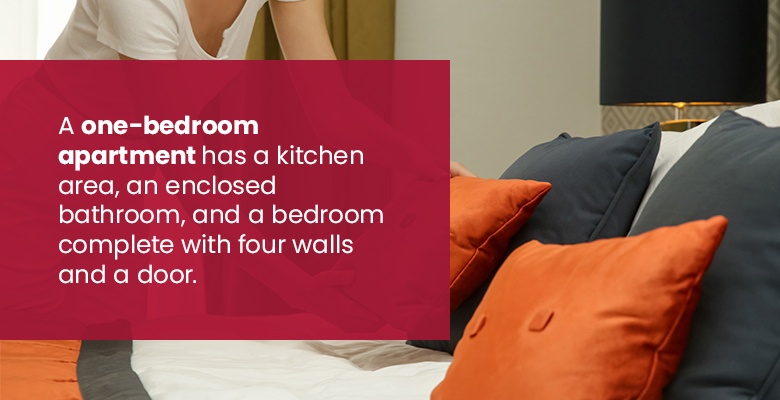
A one-bedroom apartment has a kitchen area, an enclosed bathroom, and a bedroom complete with four walls and a door. It typically has more storage space, too, with closets included in the apartment's layout.
One-bedroom apartment layouts vary. Some have a combined living and kitchen area, while others separate rooms with half walls or archways. Additional square footage may allow for more utilities and closet or bathroom space, but it is not always guaranteed. The determining characteristic of a one-bedroom apartment is a separate, enclosed bedroom.
Furnishing a One-Bedroom Apartment
While studio apartments require larger furnishings to divide the space into functional rooms, one-bedroom apartments require a larger investment in smaller details like:
-
Organizational items for storage space
-
Paintings or decorations for each room
-
Carpets and rugs
-
Lamps
You will likely have more storage spaces to organize and other nooks and crannies to consider in a one-bedroom apartment. If you plan to host guests, you may want to invest in a pullout bed, place settings, a larger kitchen table, and other items to accommodate the extra persons. Some people prefer having these features, while others enjoy the simplicity of a studio apartment.
What Are the Differences Between a Studio and One-Bedroom Apartment?
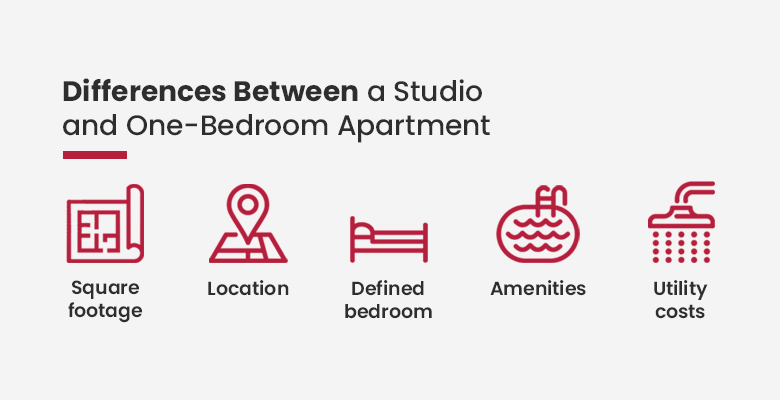
Although the terms are commonly used interchangeably, studio and one-bedroom apartments have some differences, such as:
-
Square footage: The average studio apartment is around 500 square feet but can range anywhere from 300 square feet to 1,000 square feet. One-bedroom apartments have a similar range but a higher average of 750 square feet.
-
Location: Studios are more popular in urban areas with limited space and a higher population. Many urban apartment complexes prefer building studios with smaller square footage. Less-populated suburban areas have more space to spare, so you'll find more one-bedroom apartments.
-
Defined bedroom: The key difference between a studio and a one-bedroom apartment is the presence of a bedroom. Because one-bedroom apartments have more square footage, architects can easily include a bedroom in the apartment layout. Studio apartments don't have this luxury. However, you can use your interior design skills to make space in your studio apartment for a bedroom.
-
Amenities: A studio apartment's limited floor plan doesn't leave much room for in-unit amenities. You'll have the basics — a fridge, some counter space, a shower, a kitchen sink — but you aren't guaranteed much else. One-bedroom apartments are more likely to have convenient appliances like a washer, dryer, and dishwasher.
-
Utility costs: Although residents in a one-bedroom apartment benefit from convenience, having more utilities means having a higher utility bill. Studio apartment residents tend to use less water and electricity. Plus, it requires less energy to heat or cool a studio apartment than a one-bedroom apartment because of the difference in square footage.
The differences are small, but they may influence your final decision of which apartment type is best for you.
How Are Studios and One-Bedroom Apartments Similar?
Besides the few differences, studios and one-bedroom apartments are fairly similar. Both studios and one-bedroom apartments are:
-
Popular for single residents: Compared to the average single-family house, which is around 2,301 square feet, studios and one-bedroom apartments are small. For comfort and functionality, a studio and one-bedroom apartment best accommodates a single resident or two residents if the space is larger.
-
Used interchangeably: Until you break down each characteristic, studio and one-bedroom apartments share many qualities. People often use the two apartment types interchangeably when comparing them to larger housing alternatives, such as townhomes or multi-bedroom apartments.
-
Less expensive than multi-bedroom homes: Multi-bedroom apartments have more square footage to fit extra rooms. With more space comes higher utility prices. Studio and one-bedroom apartments give you just the right amount of space you need with a lower monthly price.
Usually, apartment-hunters first decide they want a smaller housing alternative. Then, they weigh the pros and cons of both studio and one-bedroom apartments and make their final decision based on their capabilities.
The Pros and Cons of a Studio Apartment
Studio apartments are best for single residents with a smaller budget and those who enjoy getting creative with their decorating. Thinking about moving into a studio apartment? Consider the pros and cons.
The pros of living in a studio apartment include:
-
Less expensive: As outlined earlier, studio apartments are less expensive than one-bedroom apartments. Factors that determine an apartment's rent are the amount of square footage, utilities, and other amenities the apartment offers. Because studios have smaller square footage and limited utilities, the costs are lower.
-
Lower utility costs: The monthly rent for a studio apartment is low, as well as the monthly utilities owed. Having limited utilities has its advantages, like needing less energy or water during your daily routine.
-
Simple floor plan: Larger homes can have a maze of rooms to decorate and furnish. Even one-bedroom apartments have extra space and walls to navigate. Studio apartments have a simple, all-in-one floor plan that is straightforward to furnish and live in.
The cons of living in a studio apartment include:
-
Smaller space: Although a studio apartment's floor plan is fairly straightforward, there's less space to perform your daily activities. A smaller space also limits your options for pets and social event hosting. You likely have enough space for the occasional visitor, but hosting a large gathering will prove challenging.
-
Lack of privacy: A studio apartment's open concept doesn't leave much hidden. All your guests can see your sleeping and living area, closet, photographs, and other belongings from almost every angle of your studio apartment.
-
Fewer amenities: As highlighted, a studio apartment's smaller square footage allows for limited amenities.
The Pros and Cons of a One-Bedroom Apartment
One-bedroom apartments are good for single residents or two residents sharing a bedroom who have more room in their budget. Are you leaning toward a one-bedroom apartment? Consider the pros and cons.
The pros of living in a one-bedroom apartment include:
-
Larger space: More square footage means more room for activities. If you're someone who likes to decorate, you may enjoy the extra wall or floor space. The added space allows you to host more people, as well.
-
More privacy: As you're hosting, you don't have to worry about your guests seeing every aspect of your life. An enclosed bedroom allows you to store your valuable and personal items more comfortably. If you're a remote worker, you can also benefit from the mental separation from your work and sleep space.
-
More amenities: Many one-bedroom apartments come with added amenities, like a dishwasher and in-unit washer and dryer. Added amenities make for comfortable living and save you timely and costly trips to the laundromat.
The cons of living in a one-bedroom apartment include:
-
Higher costs: By choosing a one-bedroom apartment, you're going to end up paying more money for more square footage and utilities. With more utilities comes higher utility costs per month. If you have the room in your budget, these higher costs may be worth it.
-
More to clean: One-bedroom apartments give you more room to live in, as well as more space to clean. Some of the added amenities, like a dishwasher and washing machine, make it easier to keep your space clean.
Considering the pros and cons of both options, carefully think about what you can accommodate. When choosing between a studio and one-bedroom apartment, ask the following questions:
1. What's Your Budget?
As you're touring apartments, ask the leasing agents about their income requirements. If you have a larger budget, consider choosing a one-bedroom apartment. Or, you may choose a studio apartment if you want to allocate more of your income to savings or spending money. The right apartment for you depends on your personal goals and capabilities.
2. Where Do You Want to Live?
A one-bedroom city apartment is a lot different than one in a rural location. If you are a person who loves the bustling city and close living proximities, you'll benefit from a studio apartment. Studio apartments are most common in these city areas and can save you hundreds on rent compared to choosing a one-bedroom apartment.
You might have a harder time finding a studio apartment in rural areas. One-bedroom apartments are much more common. You may even spend less on rent for a one-bedroom rural apartment than a city studio apartment compared.
3. How Long Do You Plan to Rent in the Area?
Renting is a good option if you plan on living in an area for a short or undetermined amount of time. If you plan to rent for longer, you may appreciate the extra living space and privacy of a one-bedroom apartment.
If you have a smaller budget for moving, rent, and utilities, temporarily living in a studio apartment may be a good option for you. If you're participating in an internship or a student lease, a studio apartment may fit your temporary lifestyle. You may want to wait until you feel established and familiar with the area to commit to a more expensive one-bedroom apartment.
4. Do You Need More Space?
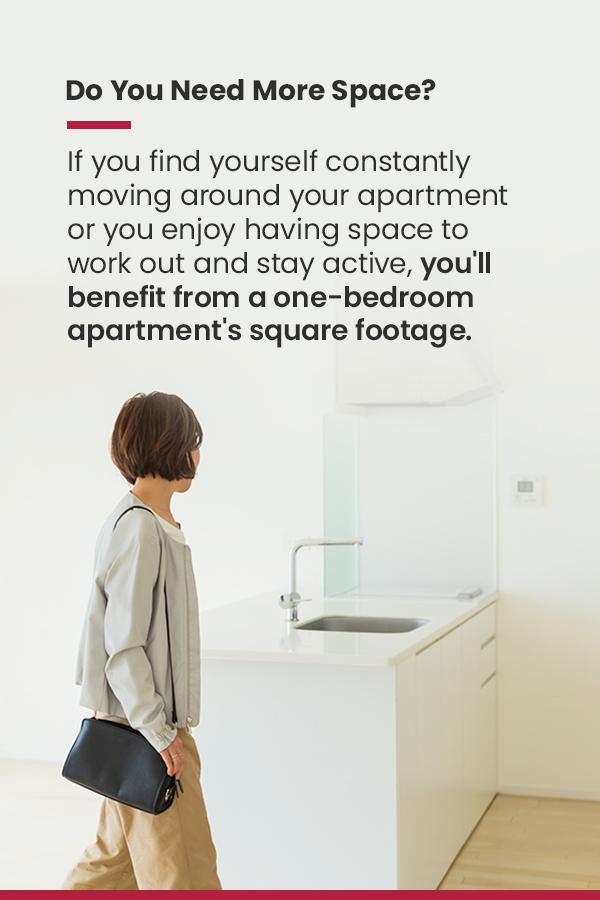
What is your daily routine like? If you find yourself constantly moving around your apartment or you enjoy having space to work out and stay active, you'll benefit from a one-bedroom apartment's square footage. Studio apartments are best for people who don't mind a more confined environment. With the strategic use of space, you can still have a dedicated movement area, but it's much harder to achieve than with a one-bedroom apartment.
5. Are You OK With Having Fewer In-Unit Amenities?
A washer and dryer are on some people's must-have list. Others don't mind the weekly trip to the laundromat. Some residents don't have the time to manually clean dishes and prefer having a dishwasher.
If you can't imagine a lifestyle without added amenities, a one-bedroom apartment may be the best option for you. Keep in mind that every apartment is different. A one-bedroom apartment isn't guaranteed to have many utilities, while some studio apartments may. Talk to the leasing agent and inquire about the in-unit utilities and complex amenities.
6. Do You Like Cleaning?
Cleaning can be very therapeutic. Some people enjoy their weekend cleaning rituals. Others with busy schedules don't have the time to clean — or they don't enjoy cleaning altogether.
Studio apartments have less space to clean, making cleaning a breeze. On average, one-bedroom apartments have more space to clean, so residents can expect additional cleaning time. If cleaning time is important to you, keep in-unit utilities in mind.
7. How Much Furniture Do You Have?
Take inventory of the furniture you have. Studio apartments require less furniture to decorate and furnish fully. If you add too much furniture, you risk making the apartment feel crowded and less homey. One-bedroom apartments are best for people with a lot of larger furniture because there is more space to furnish and live comfortably.
You also have the option of selling your furniture. You can use the money to buy smaller furniture that better fits into a studio apartment or to cover some of the moving costs.

8. Do You Have Pets?
Talk to the leasing agent about their pet policy. If you choose to live in a studio apartment, larger house pets like a dog may not enjoy the confined space. Certain one-bedroom apartments may be too small for larger house animals, too. Cats, hamsters, and other smaller pets may be a better fit. Pets may feel more comfortable in an apartment with more square footage, making a one-bedroom apartment your best option.
9. How Many People Are Moving With You?
Both studio and one-bedroom apartments are ideal for single residents. If you're moving in with a partner and plan to share a bedroom, a one-bedroom apartment will provide more breathing room and more comfortable living. It's recommended that only one resident lives in a studio apartment for privacy, functionality, and comfort.
10. Do You Like Entertaining Guests?
Are you an introvert? Or, do you prefer going to a friend's house over entertaining guests at your own apartment? If so, a studio apartment is a reasonable option for you. Studio apartments can accommodate the occasional guest but aren't ideal for a large group of guests.
11. Are You OK With Less Privacy?
When you or anyone else walks into your studio apartment, everything is visible. As you're cooking in the kitchen, all your guests sitting in the living room will be an arms reach away. The only real privacy you will have in a studio apartment is in the restroom. A one-bedroom apartment provides much more privacy. If you have a guest overnight, you can comfortably sleep in your bedroom while they relax in the living room.
Some people don't mind the openness of a studio apartment, while some prefer having their privacy.

Property Management, Inc. Can Help Find the Right Apartment for You
If you're in the Pennsylvania area, let our property management professionals at Property Management, Inc. help you find an ideal living space. We have over 50 years of experience in Harrisburg, Williamsport, State College, Reading, and many other areas, and we're dedicated to helping you find the best apartment for you.
Browse our available apartment rentals online. If you find an apartment you love, contact us right from the listing! We'll be happy to share all the in-unit utilities, amenities, pet policies, and any other information.
The post Renting a One-Bedroom vs. Studio Apartment appeared first on GET TO KNOW PMI.
]]>The post Upscale Apartments in Lititz appeared first on GET TO KNOW PMI.
]]>
Upscale Apartments in Lititz
Apartment Layouts
Amenities & Benefits at the Apartments at Lititz Springs
Individual apartments all feature a full-size, side-by-side washer and dryer as well as kitchen appliances. You'll also experience a variety of other amenities, such as:
-
Walk-in closets
-
Granite countertops
-
Premium lighting and faucets
-
Central air
-
Gorgeous upscale finishes
-
Spacious bathrooms
Other features you'll be able to enjoy when you are part of the apartment community in Lititz include:
-
A clubhouse
-
Covered parking
-
Trash included in your rent
-
24/7 emergency maintenance
-
On-site office and staff
-
Easy online rent payment methods
-
And more!
Find a Premier Apartment in Lititz With Property Management, Inc.
For almost 50 years, Property Management, Inc. has been serving as a premier property management company in Central PA. We assist residents with finding apartments throughout the surrounding areas that match both their lifestyle and budget.
For residents desiring a modern and elegant space to call home, the brand new Apartments at Lititz Springs will not disappoint.
Please reach out to us at (717) 836-9429 or email at [email protected] for waiting list details or if you have any questions. We look forward to helping you join and be a part of this chic community.
The post Upscale Apartments in Lititz appeared first on GET TO KNOW PMI.
]]>The post What It’s Like to Work at PMI appeared first on GET TO KNOW PMI.
]]>
Are you a reliable, hard-working, innovative professional? If so, we'd love to hear from you. As the premier property management company in central Pennsylvania, we're always looking for bright and creative individuals to join our team at Property Management, Inc.
But first, a little about us. PMI celebrated its 50th anniversary in 2017, and we're already looking ahead to see what we can accomplish by our next milestone celebration. In the past half a century, we've built a reputation for property management expertise and an endless commitment to each resident, reflected by our round-the-clock emergency maintenance services. Headquartered in Lemoyne and State College, we manage properties across the state. Our expansive portfolio of apartments helps customers find the home or office they're looking for throughout Pennsylvania.
PMI Offers Jobs All Over the State
With properties across Pennsylvania, PMI offers jobs as far west as Altoona, as far east as Reading, and as far south as Chambersburg an as far North as Williamsport. We typically have jobs available in a variety of cities, including Harrisburg, Lemoyne, State College, Williamsport, Lancaster, Reading, Altoona, and Chambersburg. No matter where you're located, there might be an opportunity in a commutable distance from your door.
Positions We're Looking to Fill
Thanks to the size and scope of our company, you'll find that we have new job opportunities appearing on a consistent basis. We're often in need of experienced professionals in positions such as accounting, maintenance, administration, leasing, housekeeping, and property management. Exciting career opportunities await — check out our current recruiting efforts to see if there's one that calls to you.
We hire for a range of different positions, including full-time, part-time, seasonal, and temporary. Whether you're searching for a full-time job or have more limited hours to spare, our current job openings may include an opportunity for you.
Why Work for PMI?
As a leading PA property management company, we offer nearly endless career options that can help you grow. No matter your background or role, joining PMI will mean entering a unique and engaging workplace filled with opportunities to learn both in and out of the office. We also like to have some fun!
Employee Wellness Benefits
Eligible employees receive a host of important health and wellness benefits, including:
- Medical, vision, dental, and life insurance
- Short- and long-term disability benefits
- A 401(k) retirement package
- Paid national holidays
- Paid time off
Employee Advancement Opportunities
Along with the above health benefits, PMI offers an exciting list of additional perks designed to enhance company culture, improve work-life balance, and offer employees opportunities to pursue their own individual advancement. We're here to help you accomplish your own career goals and achieve a well-rounded, healthy life. Here's what this effort looks like:
- Employee wellness program: Everyone on our PMI team can join in wellness programs such as our summer walking program, which challenges employees to track their daily steps, with every participant receiving extra PTO hours. We also promote wellness through our Biggest Loser competition, in which the three men and women who lose the most weight can earn additional PTO hours. Each active participant also receives some PTO hour bonuses. We love to see our employees challenge themselves and each other to pursue healthy living.
- Learning and education: Our goal is to see our team members continually grow as professionals and individuals. We offer educational assistance to help team members obtain their RE licenses, relevant certifications, and more. We also offer annual learning seminars for employees.
- Internal promotion: At PMI, it doesn't matter where you start — it's what you do with your opportunity. We've had leasing assistants go on to become property managers, one-time maintenance techs end up as supervisors, and more. If you show us your initiative and skills, there will be no limit to how high you can climb.
Employee Recreational Benefits
PMI offers a variety of recreational and company culture benefits that help employees find meaning in their work as well as achieve a healthy life balance. Here are two of the most prominent.
1. Charity Involvement
We care deeply about our surrounding communities across central PA. PMI has a charitable foundation, donating to local charity organizations throughout the year. We invite our employees to be a part of this culture. Team members are welcome to suggest charities to donate to on a monthly basis. Employees can donate to the chosen cause of the month, and PMI will match every donation.
In the spirit of charity awareness, each month you'll see our team members decked in their most comfortable gear thanks to "Casual for a Cause" Fridays.
2. Flexible Work Scheduling
We know you have a life outside of property management, and that life probably involves a long personal to-do list. To help you succeed both in and out of work, many PMI positions are eligible for a flexible work schedule. Many employees choose to work four 10-hour days and enjoy a three-day weekend. Others opt to work for nine hours each day, then only a half-day on Fridays.
This flexible work schedule also includes versatile start and end times. You'll have the freedom to begin working as early as 7 a.m. to end your day at 3 p.m., or alternately start as late as 9 a.m. and leave at 6 p.m. Lunch times can vary from one hour to 30 minutes. Our employees are free to adjust their schedules according to their preferences as long as the position can accommodate the schedule and has the manager’s approval.
Sound Like a Good Fit? Check out Our Open Positions
Property Management, Inc. clings closely to a "Better People, Better Results" culture. We believe that our employees are our greatest asset — when they come first, wonderful things can happen. If you're searching for central PA open job positions and you can envision yourself in our company culture, check out our current openings and submit an application today. We look forward to hearing from you!
The post What It’s Like to Work at PMI appeared first on GET TO KNOW PMI.
]]>The post Making a Leased Office Your Own Space appeared first on GET TO KNOW PMI.
]]>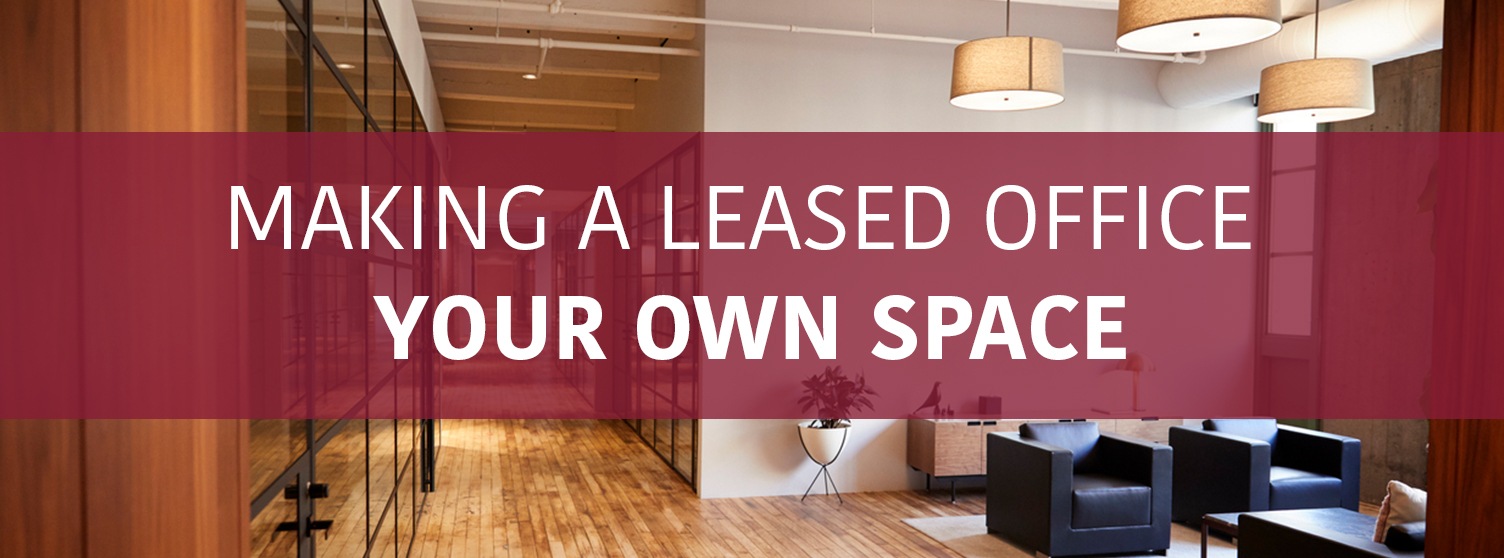
Decorating an office yet staying compliant with its lease can be a tricky balancing act. You want the space to stand out and reflect your brand, conveying to clients and employees alike your distinct work culture immediately upon walking through the doors.
Yet you also must weigh inevitable design restrictions. Painting walls, re-installing floors, and even hanging wall art may be off-limits according to the terms of your lease — leaving your ideas for decorating office space stifled.
With up to 80 percent of an office space's costs revolving around the lease, it's no surprise people have questions on how to decorate a business office economically and within the terms of their contract. We've put forward the trendiest leased-office design tips and tricks today, all to take your space from conventional to eye-catching.
1. On-Brand Artwork
Adding artwork is one of the surest ways of decorating an office space. It is also one of the most cost-effective, with technology and more websites and platforms than ever dedicated to inexpensive, custom office art.
Consider traditional canvas or framed pieces first. A handful of large, framed oils and watercolors are decorative staples in leased offices, adding color and personality to its likely plain walls. Hang these along stretches of main walls, or in central spots of break and meeting rooms where they can directly contribute to a more inviting ambiance. To keep things cohesive, look for multi-piece collections of framed artwork you can purchase in bulk and sprinkle throughout the office.

For something more contemporary, consider digital artwork like transfers and wall prints. Transfers are a particularly great way to incorporate branded artwork into the space, as you can use logos, photography, and brand-centric colors. Transfers can be added to canvas or paper, framed or left minimalist, blown up to cover the entirety of a wall or mixed and matched in a decorative collage.
Finally, add further aesthetic layers with pieces like figurines, statues, vases, ornaments, and other decorative items. Place these throughout the entire office, on end tables, coffee tables, conference areas, and more. Encourage your employees to do the same, whether they sit at individual cubicles or shared desk spaces.
Adding these eclectic decorative items in addition to wall art create what's called a "resimercial" look — a leading business design trend where offices are decorated to feel more comfortable through homey touches.
Just remember to keep things on-brand. From featured images to overall colors schemes, you don't want art to clash or create conflicting messages regarding what you're about. Use art to communicate your brand and business values, not distract from them.
2. Plants and Natural Elements
Decorating your office with plants and other nature-inclusive detailing is one of the most diverse and cost-effective ways to make a leased office your own.
These decorative additions have psychological benefits, too. Plant life throughout an office not only reduces employee stress, but it simultaneously boosts creativity, productivity, and reported levels of happiness. Greenery has even been shown to reduce the likelihood an employee will take more two to three sick days a year if their desk or primary workspace is located near pockets of plant life.
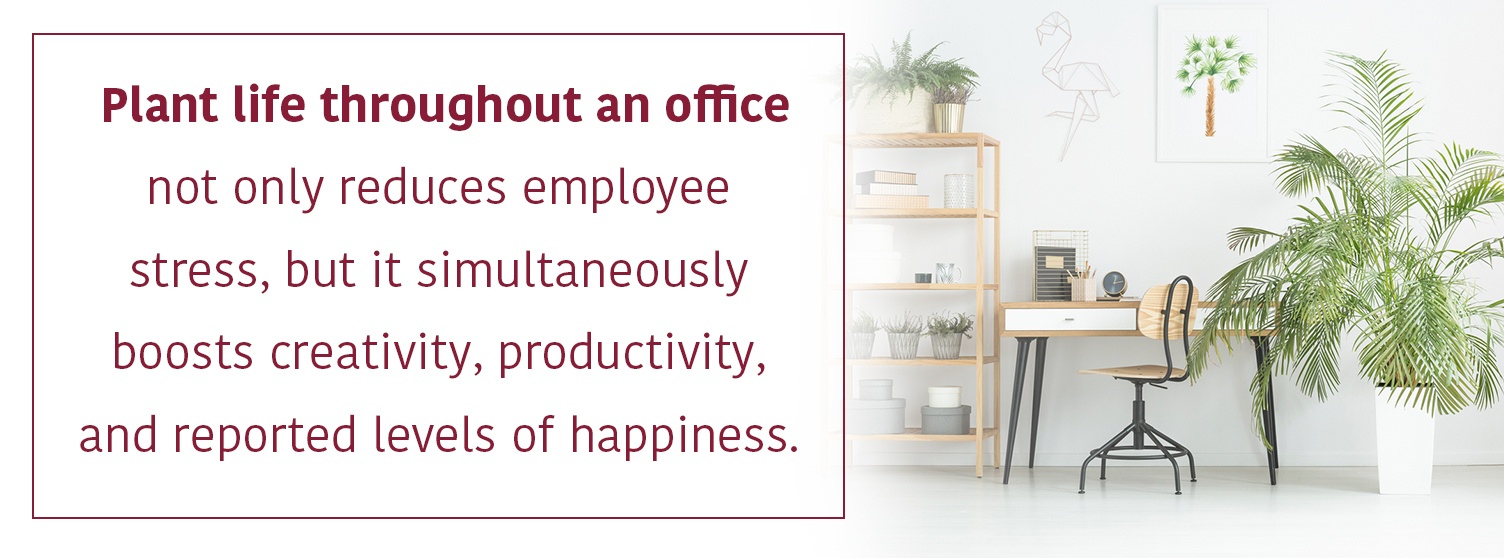
Plants are also part of a growing green trend in office design — one that's as literal as it is figurative. Many leased offices are finding creative ways to incorporate clean-air plants throughout their floor plants. They also look to pot them in "upcycled" or "recycled" pots or plantings, with refurbished items matching other art pieces and office decorations. The finished product is one that is as welcoming and calming as it is good for the environment.
Use a mix of plant and pot types when decorating an office space. For example, incorporate both standing and hanging plants with various ferns and shrubs suited for the indoors. Research the kinds of plants that grow best in your office's natural indoor conditions, with easy-to-maintain sunlight and temperature preferences.
Other popular plant-based office decorations include things like terrariums, air plants, and even vines — real or synthetic — draped from walls like artwork or used as an original office partition.
Like other things on this list, the eye is attracted to visual diversity. Think differences in colors, sizes, and locations when it comes to decorating your office with plants. Place green life in similarly eclectic containers or pots. You'll be on your way to enhancing your leased office — and feeling like a proud plant parent — in no time.
3. Rugs and Carpet Tiles
Wall-to-wall carpets and floor coverings may not be the best option to place in a newly leased space. They are expensive to install and difficult to keep clean — plus you might have to rip them out anyway once your lease is up.

Many lessees aren't partial to the carpet colors or textures that currently make up their selected space. Likewise, solid floors — like hardwood, tile, and concrete — often add ambiance and character to your office but dramatically increase noise levels. Sound waves travel and bounce around more efficiently with these floor types, then compound if your leased office has high ceilings or an open floor plan. The pros and cons of each floor type can make the other seem innately appealing, yet your lease often won't allow you to make a change.
To solve this, opt for rugs or patches of carpet tile to break up a monotonous office floorspace. Rugs and carpet tiles have the added bonus of creating structure and lending a large office more of a formal, designated layout. Plus, they are both sound-absorbing.
You can use solid stretches of carpet tiles to create paths or walkways, which is a great way to help break up open-concept offices. Likewise, rugs placed in strategic areas — such as in informal meeting rooms, collaborative workspaces or the break room — can center the space and make it feel more comfortable.
Keep an eye out for patterns and textures. Rugs can be complementary or eye-catching depending on how you pair them with their surroundings. For example, drab concrete floors of converted warehouses can be made to pop with on-brand, color complementary rugs. Natural fibers can soften hardwoods and accentuate the chairs, sofas, and artwork surrounding them. Rugs of various sizes can lend your office a cozier, homier feel.
4. Colored Partitions and Furniture
Dividers or partitions have become staples in many businesses. This is due to the reigning popularity of open-concept offices, which dominate today's business building scene due to their collaborative ambiance, maximization of natural lighting, and team-oriented, innovative nature.
Indeed, you'd be hard-pressed to find an office space today that doesn't contain some sort of open-concept architectural element. Yet that doesn't mean these kinds of designs are without flaw — particularly when it comes to employee privacy, efficiency, and stimulant-reducing productivity.
Enter office partitions. With individual worker cubicles decreasing in prevalence and wide, unobstructed floor plans becoming the office expectation, dividers are an essential — and practical — decorative inclusion.
They're as much about form as function. Mobile partitions can be used to designate or divide office departments, increase spatial flexibility, reduce noise levels, and create more dynamic and space-maximizing conference or meeting spots, planned or impromptu. Partitions also come in numerous heights, so you can pick sizes that work best with other office furniture.
The first rule for how to decorate your office space with partitions centers on colors. Opt for dividers with muted, earthy, or softened tones matching your current brand colors. Mix and match shades to give a professionally designed feel, and make sure partitions are relatively lightweight and mobile. After all, the whole point is to provide you with a more flexible, adaptive, and eye-catching use of your leased space without needing additional expensive rooms.
What's more, partitions are a great way to lend employees privacy or more isolated workspaces when they crave them. They are also vastly cheaper and more contemporary than traditional, multi-roomed offices or businesses littered with stationary cubicles.
5. Eclectic Furnishings
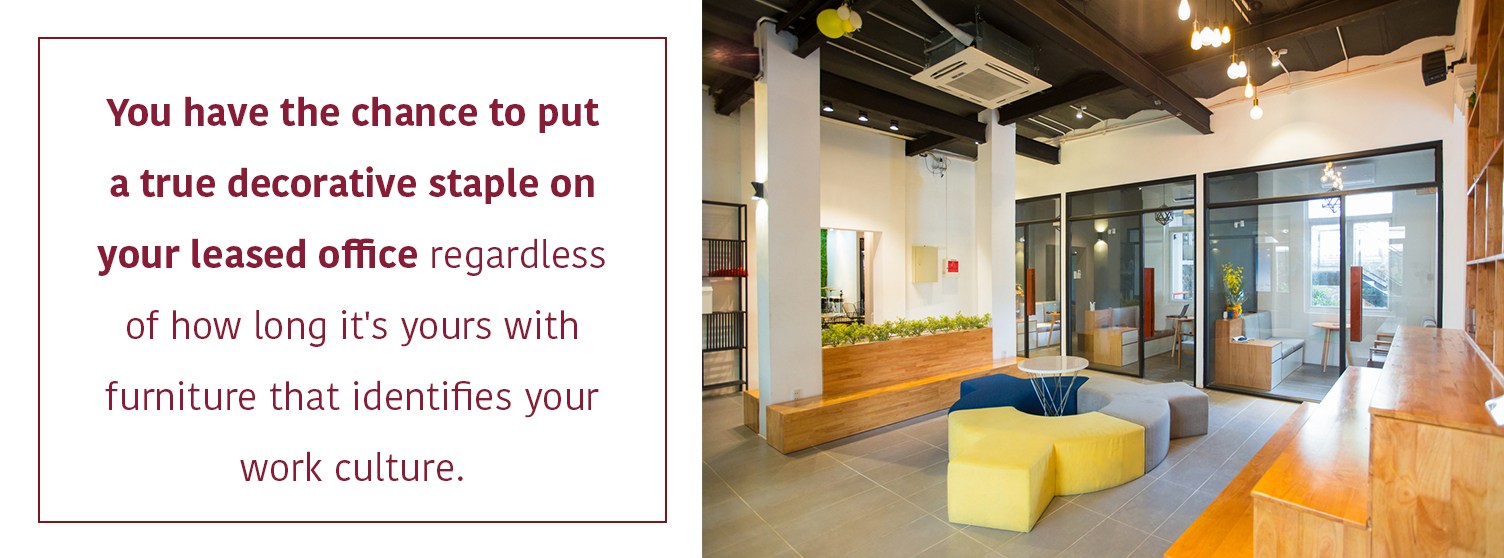
Gone are the days when ergonomic chairs and stationary desks did the trick. Office furnishings of today are more expansive, imaginative, and multi-functional than ever. You have the chance to put a true decorative staple on your leased office regardless of how long it's yours with furniture that identifies your work culture.
Examine furniture design periods or trends you like. Partial to mid-century modern? A fan of industrial-fashioned leathers and metals? Enjoy antiques mixed with bright, contemporary flares? Use a design trend as your guiding eye when starting to select furniture.
Begin by taking a look front-house. What kinds of couches or lounge chairs would you like arranged in a reception area, if you have one? This is the first part of your office a visitor or client will see, and it carries plenty of decorative and branding potential alongside comfort and practicality. You want the furnishings within it to present an immediate atmosphere, one aligned with the personality of your brand.
Next, determine your suite of work-related furniture. This includes but isn't limited to desks, tables, chairs, and other seating or surfaces options in your employees' main work areas plus those equipped in meeting and break areas. Like the reception area, employee furniture should convey a cultivated work atmosphere while matching the daily tasks and responsibilities of your workforce. It does no one any good if you include the coolest array of work chairs yet cram people together at shared tables, or design dynamic work pods but lack relevant technological outfittings.
It's increasingly uncommon for offices to house linear rows of identical cubicles. You have so much more decorative freedom today to furnish your leased office with unique workstations. Whether that be standing desks, work pods, shared tables, or even unassigned office seating, use furnishings that give your office character without distracting from its core functions.
If it fits your brand, you can also consider adding a few extra lighthearted pieces into break rooms, like foosball or pool tables. Just be cautious about dedicating too much space to these kinds of additions. If it doesn't fit your industry or doesn't match your targeted branding and work culture, forget it.
Last but not least, consider the furniture's finishings. Throw pillows on couches, geometric shelving, custom end tables, and more round out your leased office to give it true decorative personality.
6. Lighting
Most people imagine office lighting as row after row of rectangular fluorescent ceiling lights. These installations became the building-lighting default in the late 1970s — alongside other outdated trends like parallel rows of high-walled cubicles. Yet they are easily one of the least flattering and energy inefficient lighting choices around today — and one you can creatively hack even in a leased office.
Recent lighting trends in office spaces have shifted to highlighting standing lamps. Regardless of your renter's contract, you can add these pieces into your space. There are dozens of styles in existence, from Scandinavian minimalist to antique, stained-glass "Tiffany" style lamps. Tower lamps are ultra-sleek and contemporary, industrial lamps work well in urban, open-concept offices, and arching floor lamps break the stick-straight vertical lamp mold.
The boldest offices even fuse lighting into signs, artwork, and office furniture itself, using neon accents for a fun decorating twist.
7. Creative Filing and Storage
Storage within an office takes many shapes, yet all businesses need it. Leased commercial spaces will likely come with some built-in storage already, be those mounted cabinets or corner storage closets. Decorating an office space's filing and storage can go far beyond these options, though.
Think of all the ways you store items at home. From shelves and bookcases to baskets, bins, drawers, and display cabinets, you're familiar with multiple residential storage solutions — just in a different capacity.
Why not begin to merge these over to the office innovatively? Creative filing and storage options abound. What's more, you can get bargain deals on storage furniture at many outlet stores and online. Or for real brand-aesthetic alignment, you can commission custom cabinets and shelving units from a local business or craftsperson.
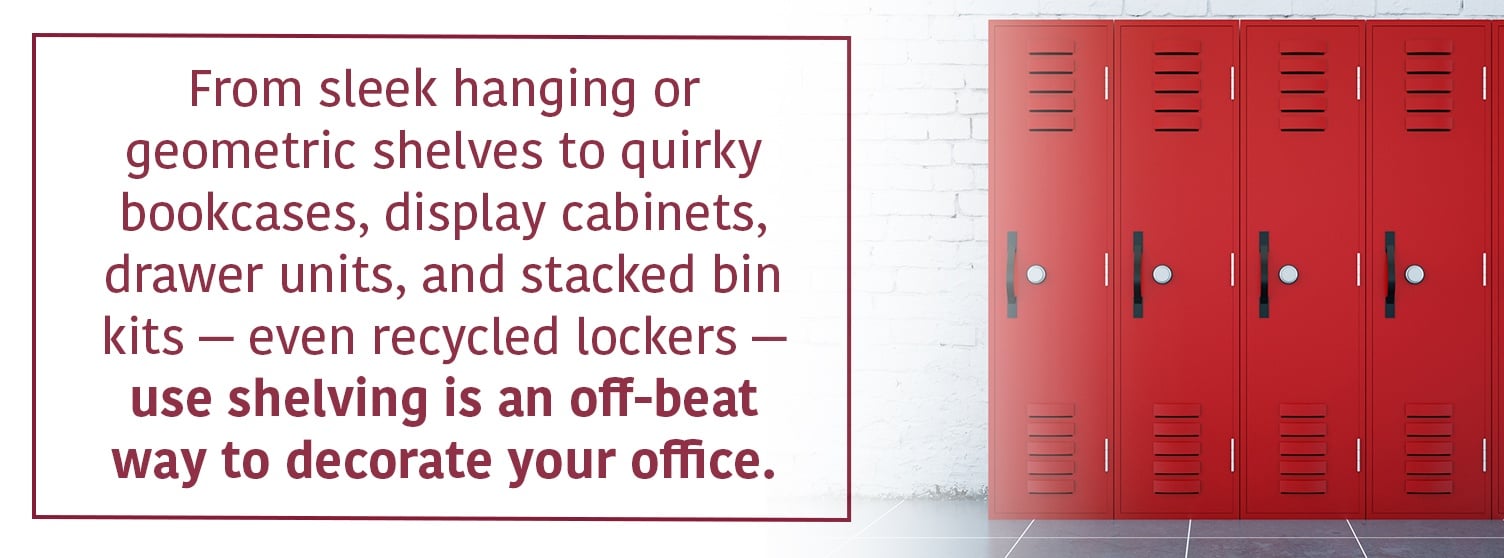
There are dozens of unique filing and storage systems to pick from. From sleek hanging or geometric shelves to quirky bookcases, display cabinets, drawer units, and stacked bin kits — even recycled lockers — use shelving in an off-beat way to decorate your office. You'll find you're simultaneously maximizing space and solving filing pain points, too.
8. Think Mobile
At the end of the day, a leased office is still liable to the terms and conditions of its contract. Most of its significant infrastructure cannot be changed.
Yet there's simply no reason to see a rented commercial property as static or lifeless. In fact, treating it so could have the opposite effect — stifling employees' spirit, reducing productivity, and turning off clients or customers.
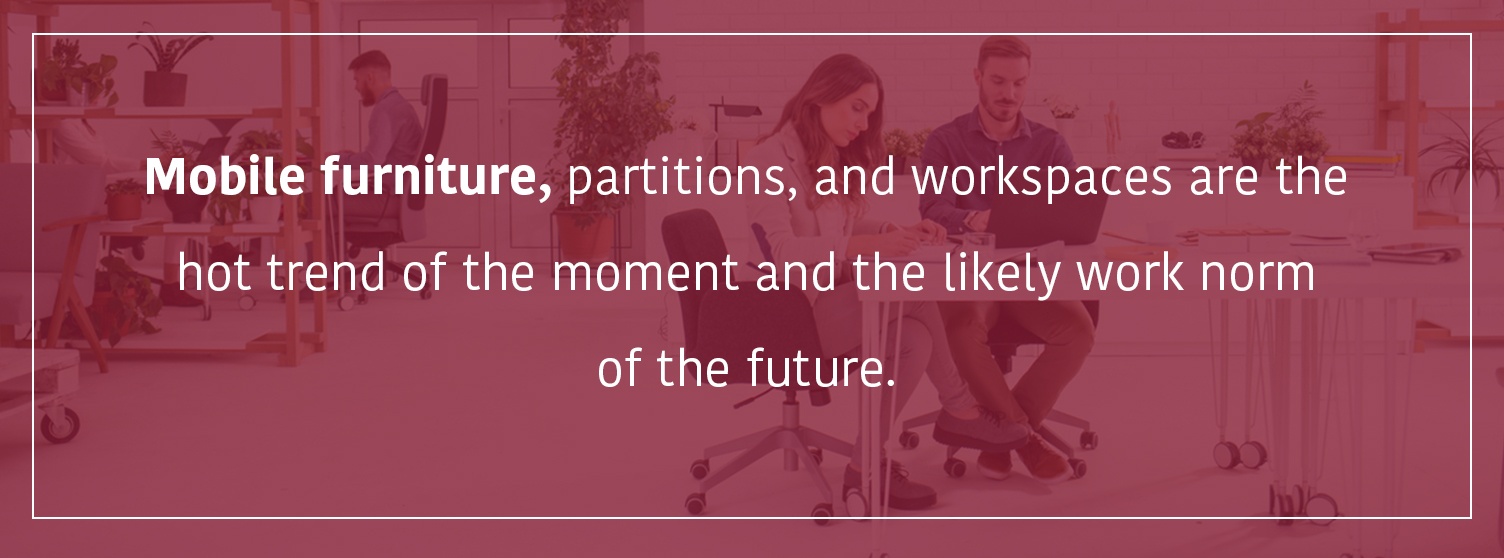
With this in mind, keep as much of your leased office designs geared towards the flexible. Mobile furniture, partitions, and workspaces are the hot trend of the moment and the likely work norm of the future. Be preemptive about this with your leased office space today by designing work areas that are open and reconfigurable.
A mobile mindset of decorating your leased office space carries the added bonus of staying well within your lease parameters. No clunky installations or heavy, difficult refurbishments that go out of style in a few years — or that you'll have to get rid of come the end of your lease.
9. Stick to a Color Scheme
Color psychology is a significant — and scientifically backed — decorative element in your office space. The colors you choose for your space have the ability to transform the moods of those within it, for better or worse. Choose yours critically and cohesively early on with the following knowledge.
According to color psychology, perceiving different shades stimulates different psychological states in humans. It is considered a "ubiquitous perceptual stimulus" and can influence everything from attraction and fatigue to food and beverage purchases.
Blues and greens evoke a sense of calmness and thoughtfulness in most individuals. These cool shades have the interesting effect of making most people focus inward, as well. This introspective-inducing property could be useful in quieter parts of the offices, like focus rooms, or in departments where individuals need to work in controlled, composed atmospheres.
On the other hand, feelings of energy, drive, and excitement are stimulated by warm colors. Reds and oranges are bold color choices in offices, grabbing attention and creating upbeat energy. Yellows strike a psychological middle ground, stimulating creativity while also possessing a similar calming property for most people.
Pick a color scheme of four to five complementary shades, and use it as the guiding eye for selecting rugs, furniture, curtains, pillows, chairs, cushions, shelves, storage and artwork. If permitted in your lease, paint accent walls with one or two colors from your palette. Add surprising, stimulating splashes in unexpected places. Color detailing alone has the capability to transform your office from a space where people clock in and clock out to a space where people are energized, efficient, and feeling at home.
Commercial Office Space Expertise Throughout Pennsylvania
Property Management, Inc. ensures you're set up to make a leased office look and feel your own — today and tomorrow.
With over 6,000,000 square feet of managed commercial properties, you have a compelling range of options to find the space to put your business on the map. Each property comes with maintenance, repair, and management expertise plus 24-hour emergency contact so you can focus on your real priorities — launching the business of your dreams.
Explore our current commercial listings, or get in touch directly at (717) 730-4141.
The post Making a Leased Office Your Own Space appeared first on GET TO KNOW PMI.
]]>The post PMI Food Drive Exceeds Expectations appeared first on GET TO KNOW PMI.
]]>
PMI Food Drive Exceeds Expectations
Property Management, Inc.’s annual food drive this year exceeded expectations with the generosity of employees and the local community. All canned and boxed food donations went directly to Bethesda Mission in Harrisburg, PA. The food drive was a month long campaign that culminated at the company holiday party where all of the donations were gathered from many locations throughout Central Pennsylvania.
Giving To Bethesda Mission
Property Management, Inc. has a very long relationship with Bethesda Mission and has been coordinating different types of donations drives for many years. PMI’s philosophy of being an integral part of the community is evident in the Core Values: we do business where we live and have a positive impact on our communities.
Donation Collection
 Collection took place at our corporate office in Lemoyne, PA as well as some of our managed residential communities of: Graham Hill Apartments in Harrisburg, PA
- Wesley Park Townhomes in Mechanicsburg, PA
- Delbrook Manor in Mechanicsburg, PA
- Woodland Park in Williamsport, PA
- Long Meadows Apartments in Camp Hill, PA
- Twin Lakes in Harrisburg, PA
- East Park Gardens in Harrisburg, PA.
Employees and residents generously donated cans of vegetables, cans of soup, condiments, boxes of cereal, pasta, and more. PMI received far more donations than anticipated and were proud and impressed with the kindness of the community. Because of the donations, many in need will receive food from Bethesda Mission.
About Bethesda Mission
Bethesda Mission has been providing hope and healing to hurting and homeless people in the Greater Harrisburg area since 1914. Bethesda Mission picked up all of the donations and was very impressed by the amount of food collected. David from Bethesda Mission said it was the largest one-stop pickup of donations that he’d ever seen. To learn more about Bethesda Mission visit www.bethesdamission.org.
Property Management, Inc. Holiday Party
The holiday party began with the donation drive and then included food and festivities for employees and retirees to enjoy. Employees from all over the State were invited to attend. Employees celebrating work anniversaries of 5 to 25 years of service were also recognized. PMI professionally manages real estate throughout Pennsylvania. To learn more PMI or managed properties, please visit www.rentpmi.com.

The post PMI Food Drive Exceeds Expectations appeared first on GET TO KNOW PMI.
]]>The post HOUSING AND THE BOTTOM LINE appeared first on GET TO KNOW PMI.
]]>Today’s Manufactured homes offer many desirable features that crush the perception of a trailer. Basically, these homes are made of the same components as traditional site-built homes, drywall, OSB board and lumber etc.
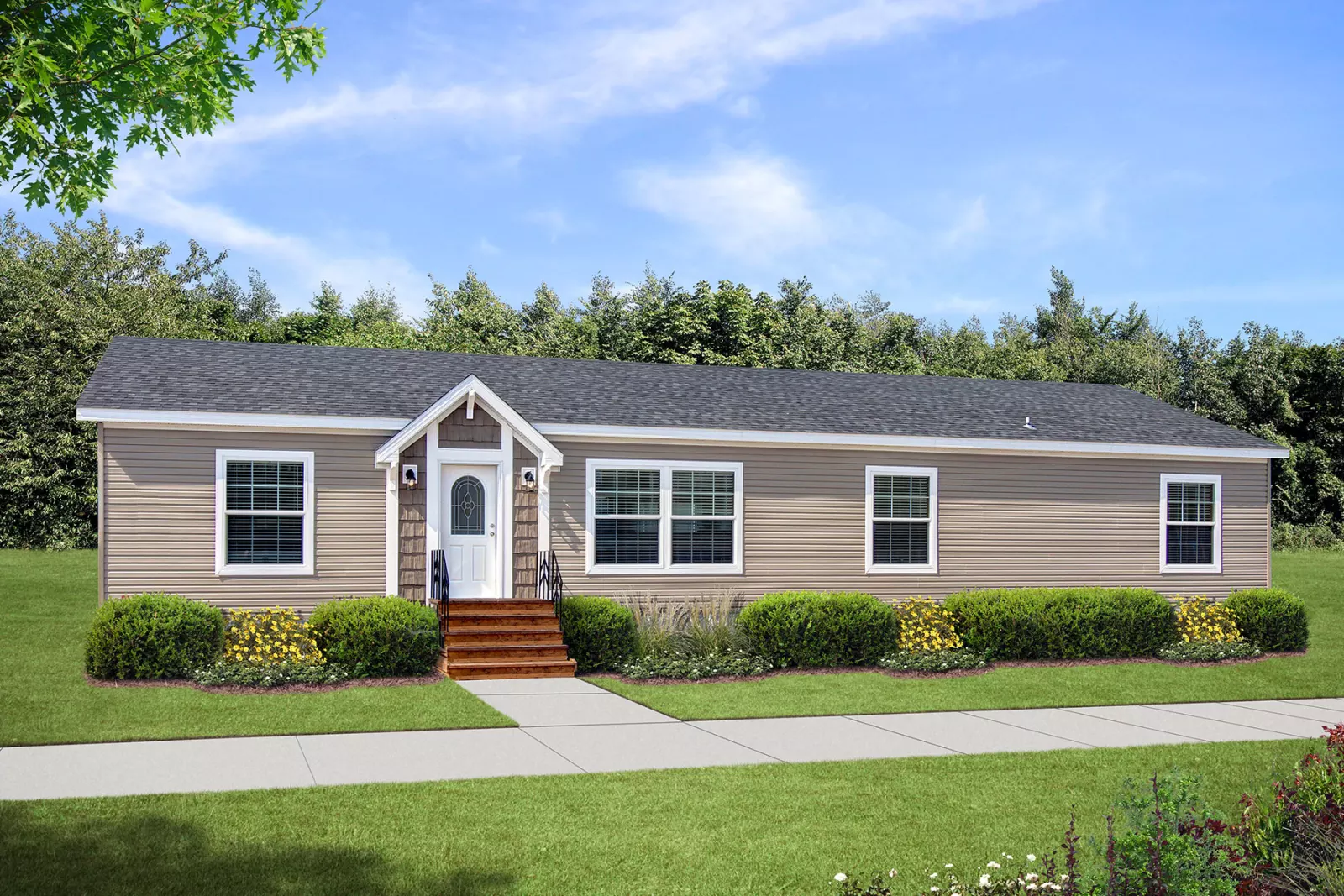
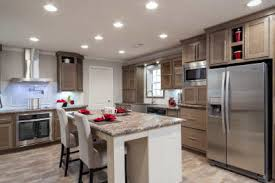
So, what are the differences?
The biggest differences between manufactured housing verses site-built homes can be summed up in TWO words, “CODE” and “COST”.
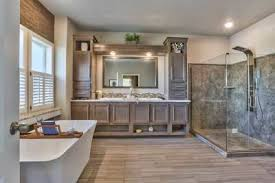

Let’s take a CLOSER LOOK —
Manufactured built housing is primarily built with typical materials to perform in specific manner–
- BUILT PER HUD CODE Federal Code that supersedes the UCC under Federal inspection
- Built in a climate-controlled facility where materials are kept out of the elements
- To perform in such a manner that meet wind zone, snow load and thermal zones for the location where the home is to be installed
- Made to be EASILY transportable to homesite
- Constructed assembly line to minimize expenses and streamline processes which lowers cost
- Typically, 30% less expensive than stick built homes per square foot
- Less expensive to own and maintain
- Can appreciate in value if maintained properly
Traditional / Stick built housing is built with a prescriptive method using specific components–
- BUILT PER UNIFORM CONSTRUCTION CODE under Local/State Inspections
- Built outside in the elements where there is little to no protection form moisture on the structure as it’s being constructed
- Meets designated code to for wind and snow loads
- Constructed on the homesite
- Costs per square foot vary but are much higher than Manufactured / Factory Built
- More expensive to own and maintain
- Appreciates at a higher rate
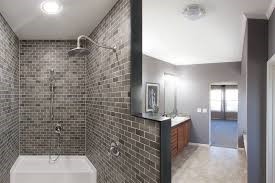
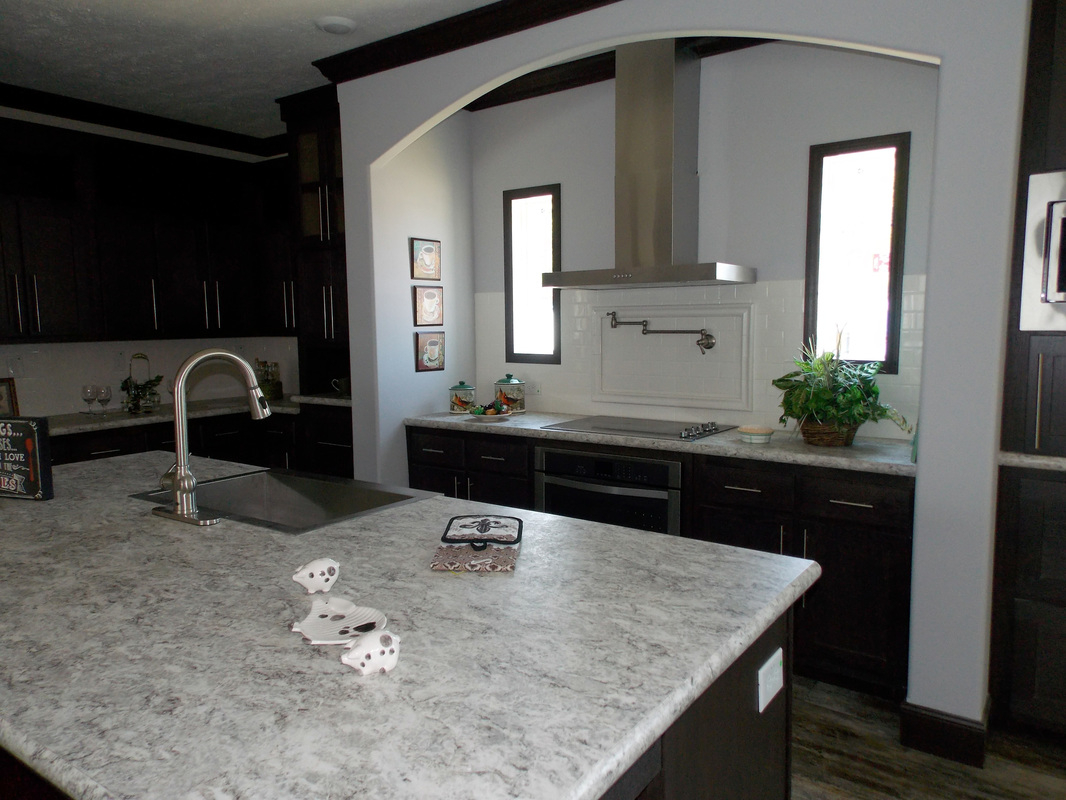
Manufactured or Factory Built homes are designed to be a more affordable option to site-built homes; yet still provide quality for consumers that want to own their home rather than rent.
Today’s manufactured homes can travel down the highway at 60 MPH with sustained wind and stay in one piece. So they will hold up in that storm with 60 + MPH wind gusts.
So, don’t dismiss an affordable option just because you are not familiar with the product and options. Check them out you may find your new home!
AND THAT"S THE BOTTOM LINE
Property Management, Inc. manges a variety of manufactured communities across the state. Take a look at our available listings and get in touch today.
Photos compliments of Champion Homes
The post HOUSING AND THE BOTTOM LINE appeared first on GET TO KNOW PMI.
]]>