
The post How Much Should You Spend on Rent appeared first on GET TO KNOW PMI.
]]>
Looking for a new place to rent is an exciting time. Whether you are moving into your first place or looking for something different, you need to know how much rent you can afford. There are a few ways you can work this out. While there is no one-size-fits-all answer to how much you should pay for rent, the 30% rule and the 50/30/20 rule are two methods you can use to determine how much you can afford to spend on rent.
What Is the 30% Rule?
The 30% rule ensures you have enough money to cover expenses such as debt repayments, savings, food, utilities, and entertainment. However, there are two weak points to the 30% rule.
First, it doesn't account for inflation, income stagnation, or rising rent prices. For example, the average rent in the City of Philadelphia was 19% higher in March 2022 than in January 2018. The average hourly wage rate increase at that time was only 2.5%, leaving a gap between renters' wages and rental costs.
Secondly, the 30% rule doesn't consider your situation. Your financial goals, debt repayments, and the average rental prices in the area all impact how much you can spend on rent.
What Is the 50/30/20 Rule?
If you have to spend more than 30% of your income on rent, you might try the 50/30/20 rule instead. This method splits your income into three parts:
- 50% on necessities or essential monthly bills such as groceries and rent
- 30% on non-essential expenses such as going out or other wants
- 20% on savings or debt repayments
The 50/30/20 rule has many benefits. It is simple, doesn't restrict your spending, and can help you reduce fixed costs by showing you exactly where your money is going. There are a few drawbacks to it, though. Like the 30% rule, it doesn't consider your unique circumstances. You might have higher fixed costs because of student debt. Maybe you want to save more money and find 20% isn't enough for your financial goals. Spending 30% of your salary on wants can be a lot. If you make $1,000, you can spend $300 on wants. Keep in mind all of this when creating a monthly budget.
Other Factors to Consider When Renting
You'll want to consider a few additional factors when renting. Every rental community has different requirements. There could be application fees, deposits and other costs to consider. Here are some of the most common expenses to bear in mind:
- Transport costs: If possible, try to find a place as close to your work and other amenities as possible. How long will it take you to get to work or shops? How much will it cost?
- Utilities: Does your rent cover utilities, or are they an extra cost? Keep an eye out for listings that mention if utilities are included. Some rentals might only include certain utilities such as water but not electricity or gas.
- Amenities: These are extras that come along with the rental and can include things like laundry rooms, air conditioning, fitness areas, security, parking, and storage. Some complexes provide these as part of the rent, but it is best to find out if there is an additional cost.
- Deposit and application fees: This can either be one month's rent or the first and last month's rent. If the place is pet friendly, find out if a pet deposit is required. Application fees might also apply.
- Renters insurance: A great option to make sure you cover your property and belongings in the event of theft or a disaster. In some cases, landlords may require you to have renters insurance before you move in, but not all do.
- Signing incentives: Landlords or rental agents often offer discounts or free months to renters to finalize a rental agreement.
Considering all these extras and possible discounts, how do you know how much you are spending on rent each month? The effective rent formula can help. Start with the lease length minus any free months. Multiply that number by the gross rent you pay, including amenities and other fees. Divide this by the full lease length to determine how much you pay each month. Always check with your landlord or rental agent about additional costs and discounts. They may not collect rent for one month instead of working out the effective rent amount and spreading it over your full lease.
Find the Right Rental for You with Property Management, Inc.
Moving into a new home is exciting, and you must consider many factors. There is a lot to plan for, from where you want to live to what you might need for your first apartment kitchen. Creating a budget and knowing how much rent you can afford is the first step in helping you find the right home for you. At Property Management, Inc., we are here to help you every step of the way. Our dedicated team can guide you through working out your rental costs on any of our exceptional properties. Take a look at our rental properties online or consult with our agents by calling 717-730-4141 today!
The post How Much Should You Spend on Rent appeared first on GET TO KNOW PMI.
]]>The post Apartment Kitchen Checklist appeared first on GET TO KNOW PMI.
]]>
Moving into a new apartment is exciting. While there are many different items you can bring along, you’ll want to focus on those you need the most. Whether you're moving into your first apartment or you’ve been living on your own for years, starting with essential kitchen items will ensure a smoother transition into your new home.
To plan your move, read through our commonly asked questions and follow along with our apartment kitchen checklist to stock your kitchen with the most quintessential items.
Apartment Essentials Checklist FAQ
For an easier transition, we’ll provide a few common questions and answers to help you decide what you need for your apartment.
What Do I Need to Move Into My First Apartment?
If you’re moving out of your childhood home for the first time, consider the appliances and amenities included in your apartment before packing to lessen the load.
From there, you can decide what you’ll need as soon as you get to your new apartment while waiting on buying the less essential items for a later time when you’re not so busy. Follow our kitchen essentials list below and create a first apartment checklist that includes bathroom, bedroom, and dining room items.
Bring along anything your family might hand down to you while making use of store deals and coupons in your area for the items you don’t have.
How Much Do I Need to Move Into an Apartment?
You’ll often need to pay a security deposit and the first month's rent before your move-in day. You’ll also want to account for utility bills, groceries, and other monthly expenses. It's always a great idea to budget your money to help you save up for your apartment.
What You Need In Your Kitchen When You Move Out
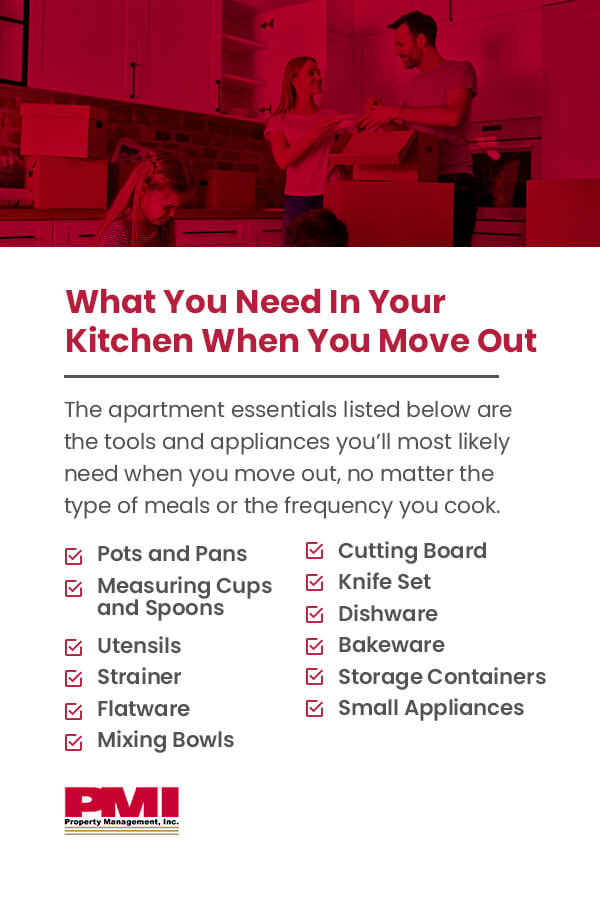
Follow along with our basic kitchen needs list to help you plan your move. The apartment essentials listed below are the tools and appliances you’ll most likely need when you move out, no matter the type of meals or the frequency you cook.
1. Pots and Pans
You don’t have to be a master chef to need pots and pans in your home. The tools you use determine the meals you cook, and pots and pans provide ease and convenience to help you cook almost anything.
Whether you’re an occasional chef or prepare multiple meals a day, having a variety of pots and pans is an excellent investment. Choose from pots and pans such as:
- Saucepans
- Frying pans
- Skillets
- Casserole dishes
You’ll want a set that includes at least two types of saucepans with lids, two varieties of skillets, and baking casserole dishes. For instance, a frying pan helps fry eggs, while casserole dishes are essential for making mac and cheese or lasagna. The types of cookware sets vary, though you’ll want to choose the one that matches your meal preferences.
2. Measuring Cups and Spoons

Prepware is extremely important, which is why we’ve included measuring cups, mixing bowls, and knives on our list. After all, you’ll need to prepare your food before starting cooking. Measuring cups and spoons help you precisely portion out the ingredients you’ll need for your recipes, so your meals taste fantastic.
Bring a full set of measuring spoons and two sets of measuring cups to your new apartment. One set should include liquid measuring cups with handles and pour spouts. The other set should consist of cups and spoons to correctly measure and level off dry ingredients.
3. Utensils
Whether you place them in a countertop canister or inside a drawer, you’ll want various utensils to cook a variety of meals. The essential utensils include:
- Spatulas
- Tongs
- Ladles
- Large spoons
- Meat mallets
- Vegetable peelers
- Whisks
- Rolling pins
Spatulas, soup ladles, wooden spoons and slotted spoons all come in multiple sizes and materials for your needs. For instance, a nonstick skillet can scratch when you handle it with metal utensils, so bringing wooden and plastic utensils to your new place is great.
Vegetable peelers and meat mallets are excellent options if you love to cook. If you’re more of a baker, whisks and rolling pins will come in handy at your new home.
4. Strainer
Strainers are convenient and crucial for many recipes when you include them in the cooking process. They’re perfect for rinsing and steaming vegetables, for instance. And whether you’re making a light meal such as box macaroni and cheese or a complex Italian dinner, strainers make the ideal tool for draining pasta.
Even bakers can appreciate strainers to sift flour and easily incorporate it into the batter. You can even find smaller strainers that are great for powdering decorative cookies and cakes. The possibilities for recipes are endless when you have a strainer in your kitchen.
5. Flatware
Flatware is vital for any kitchen. You’ll want to stock your kitchen drawers with quality cutlery for eating and dining on your own or with family and friends. You can purchase flatware in different materials, such as stainless steel or sterling silver. Opt for a decorative style or a utilitarian look, depending on your budget and aesthetic preference. Examples include:
- Forks
- Knives
- Spoons
- Butter plates
- Sugar bowls
- Salt and pepper shakers
- Saucers
Butter plates, salt and pepper shakers, and sugar bowls all make excellent flatware choices to bring to your new apartment. Butter plates and containers help keep your butter at room temperature for baking, and you can refill and leave salt and pepper shakers on your kitchen table for added convenience. Pack the saucers for your tea or coffee or a place to rest your sponges or soap. Flatware is a must-have component of any kitchen.
6. Mixing Bowls
Mixing bowls make inexpensive and versatile tools for baking and cooking all types of recipes. Purchase a set of three mixing bowls that fit inside one another to save space and keep them anywhere in your kitchen.
You can choose from stainless steel, glass, plastic or even silicone bowls with tops to save food for later. You can purchase mixing bowls in all colors for an affordable price or search for a set that comes with measuring cups and spoons for even more significant savings.
Mixing bowls are perfect for baking, marinating meat, and making salad dressings, dips, and seasonings. A mixing bowl set is vital for your new kitchen, from desserts to savory meals.
7. Cutting Board
Bring along two cutting boards to your new apartment — one for raw proteins and another for cooked foods and produce. This way, you can avoid cross-contamination and have extra space to cut and prepare your meals.
For cooked foods and produce, plastic or wooden cutting boards will do the trick. Wooden cutting boards are popular since they tend to be very sanitary and lack grooves for germs to gather. At the same time, plastic cutting boards make an easy-to-clean, dishwasher-safe alternative to cut raw meat and keep your knives in good condition.
8. Knife Set
A proper knife set is essential to smoothly prepare meals. You’ll want to have a basic set that includes:
- Serrated knife
- Chef’s knife
- Paring knife
A chef’s knife ranges in size and helps you chop and dice produce or cut into poultry, meat, and fish. A serrated knife is excellent for foods with a hard exterior, such as bread, while a paring knife will help you cut fruits and vegetables. You’ll need knives for almost all meal prep, making them indispensable tools for your new kitchen.
9. Dishware

Dishware is crucial for any kitchen for obvious reasons. You’ll want to be able to serve your guests and eat comfortably with the proper set, including:
- Plates
- Cups
- Mugs
Bring a dishware set that includes small and large plates, serving platters, and bowls. Mix and match colors and designs depending on your style preferences and find affordable dishware almost anywhere.
Remember cup and mug sets and search for dishwasher and microwave-safe options for extra convenience. Glass cups are perfect for preventing leaks that often accompany those red disposable cups. In contrast, mugs are ideal for hot drinks and even easy mug cakes.
10. Bakeware
Many people look to baking to reduce stressand relieve their anxiety. That's why we've added bakeware to the list of items to take to your new apartment. Whether you’re baking a cake or roasting a chicken, it’s vital to have the correct pans for your oven. Types of bakeware include:
- Rectangular baking pan
- Baking sheet
- Round baking pan
- Muffin tin
- Loaf pan
A baking pan or baking sheet makes any meal easier to prepare, while specialty pans for certain meals such as pizza or salmon make an excellent investment.
You can make cookies, roast veggies, bake meats, and roast fish with the proper bakeware. A baking sheet without edges makes it easier to slide off finished cookies, while a baking pan with edges makes moist and rich brownies and desserts.
When you need to whip up birthday cake or muffins, cake pans and muffin tins make the perfect bakeware for your new kitchen. A loaf pan will help you bake and shape up the tastiest bread.
11. Storage Containers
Plastic or glass storage containers with secure lids make a great place to save leftovers or hold onto ingredients. You might use storage containers to keep chopped vegetables fresh to toss into a dish or place unused ingredients from making dinner.
You can find a variety of storage containers in the styles, shapes and sizes you need. Storage with undetachable lids means you’ll never lose another top again. And there are plenty of dishwasher, microwave, and freezer-safe options to keep your food nice and fresh.
Choose from zip-lock or zipper storage bags to store leftovers like pizza or sandwiches. You might even use gallon freezer bags for meal prep and freezing larger dinners for later.
12. Small Appliances
While your new apartment is bound to have the necessary kitchen appliances like a fridge and a dishwasher, you’ll want to stock your new place with the smaller devices you need to make your life easier:
Coffee maker: If you’re like most people, you’ll want a coffee maker to jump-start those early mornings. You might choose a traditional coffee maker with a glass pot or a single-serve coffee maker for smaller kitchens. Don’t forget your coffee beans, cream, sugar, and even syrups for your lattes.
Blender: A blender provides many different uses, making it an essential item for your kitchen. You can choose from different sizes to fit your space — from small to large blenders great for specific recipes. Toss in your favorite vegetables to create a soup or dressing for your salads. Enjoy smoothies, milkshakes, and even salsas or dips with a blender.
Microwave: If your apartment doesn’t include a microwave, you’ll want to invest in one to efficiently heat meals and prepare quick frozen dinners. Microwaves come in different colors and sizes to match your aesthetics and fit your apartment, no matter the space you have to utilize. Search for countertop microwaves that you can place on your counter and easily clean. There are many types of microwaves at prices that fit most budgets.
Toaster: A toaster is great for those mornings when you need to quickly grab your toast and go. It’s also an excellent investment for toasting slices of bread for deli sandwiches, warming bagels, and even heating breakfast pastries. A toaster oven is equally remarkable for heating larger meals and preparing leftover foods from the night before if you have the space.
Mixer: Whether you opt for a large mixer or a hand mixer, baked goods and trendy whipped coffee are so much easier with this essential kitchen appliance. You might use a mixer for kneading dough, creating fluffy cakes, and even stirring up ingredients for some pasta recipes. Place a large mixer and bowl on your countertop or a hand mixer in your drawer to create delicious desserts.
Slow Cooker: A slow cooker is the ideal kitchen appliance for busy people. Simply throw in your dinner ingredients before heading off to work, and your meal will be ready by the time you get home. You can buy a small cooker for yourself or a large one to feed an entire family for days. A slow cooker is an excellent appliance for meal prep and when you don’t have the time to cook during the day.

Tour Our Rentals to Envision Your New Space
Ensure your new kitchen is stocked and ready to go as soon as you move in. Planning and following a checklist of essential kitchen items ensures you have the time to feed yourself while unpacking the rest of your apartment. Envision your new kitchen when you schedule a tour rental with PMI. With 50 years of excellent service to our clients and communities under our belt, PMI is excited to help you find the ideal apartment for your needs. Appreciate 24-hour emergency maintenance, prompt service, online rent payment, and more! Check out our current apartment listings or call 717-730-4141 to schedule your tour today!
The post Apartment Kitchen Checklist appeared first on GET TO KNOW PMI.
]]>The post Renting a One-Bedroom vs. Studio Apartment appeared first on GET TO KNOW PMI.
]]>
Renting a One-Bedroom vs. Studio Apartment
If you're apartment searching, you've likely seen the terms "one bedroom" and "studio apartment" in many local listings. But what's the difference? People often use these terms interchangeably. However, each has unique features that may influence your apartment search. Consider the pros and cons of one-bedroom and studio apartments before making your final decision.
What Is a Studio Apartment?
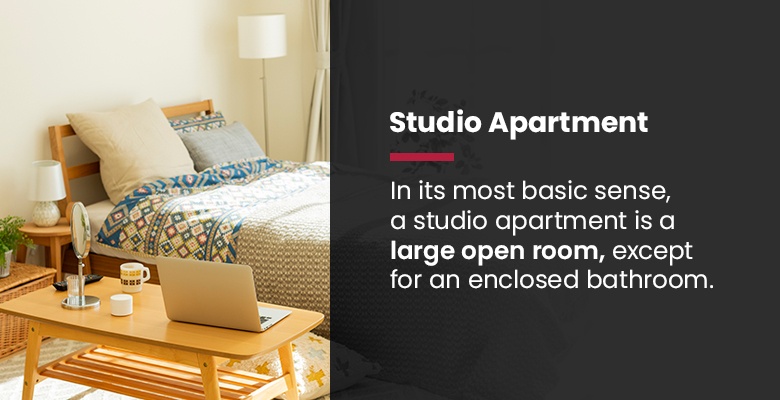
In its most basic sense, a studio apartment is a large open room, except for an enclosed bathroom. Somewhere within the room is a kitchenette, outfitted with the basic kitchen necessities.
Other apartment types have one or more rooms, like a bedroom or office, but a studio apartment is an all-in-one room. The only doors are a front door, bathroom door, and a balcony door on occasion. You can still have designated bedroom and living areas, depending on how you furnish your apartment.
Different Versions of Studio Apartments
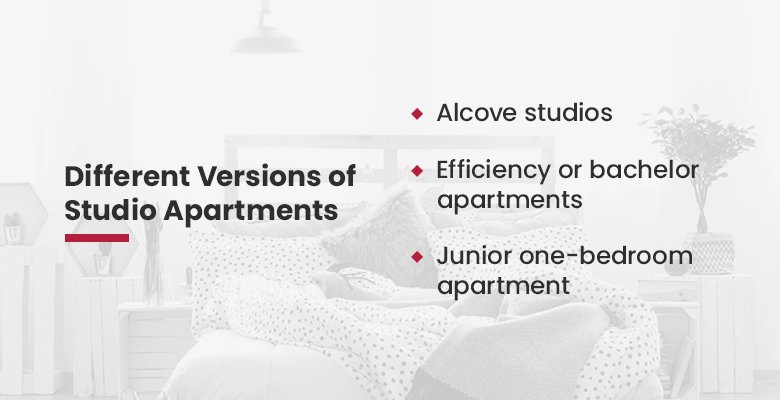
To be considered a studio apartment, no walls should completely divide the living space into multiple rooms besides the bathroom. Architects can manipulate the studio apartment layout to create different versions, including:
-
Alcove studios: In a typical studio apartment, residents use dividers to separate their bedroom from other living areas. In an alcove studio, architects design a division for you. Alcove studio layouts have a designated bedroom nook, like a loft, for example. The apartment still has an open concept otherwise.
-
Efficiency: Think of efficiency apartments as a more "efficient" use of space. They're considerably smaller than a typical studio apartment and don't have as many amenities. The biggest difference between an efficiency and studio apartment is the kitchen. Accommodating the smaller space, efficiency apartments usually lack counter space and certain appliances, like a dishwasher or full-sized fridge.
-
Junior one-bedroom apartment: A junior one-bedroom apartment is a mix between a studio and a one-bedroom apartment. Junior one-bedroom apartments are usually larger than a typical studio apartment, but not always. The biggest difference is the bedroom space. A junior one-bedroom apartment has a partially installed or permanent wall separating the bedroom from the rest of the apartment. The bedroom area isn't fully enclosed, but the partial wall provides added privacy.
Some studio apartment listings don't go into the specifics. You can typically determine which version the apartment is by looking at the layout and utilities. The listing price may be an indication, too. Efficiency apartments are generally less expensive than alcove studios, with junior one-bedroom apartments being the most costly version.
Furnishing a Studio Apartment
Decorating a studio apartment can be tricky. Residents have to tap into their interior design skills to transform one room into a kitchen, living room, bedroom, and potentially more. The best way to decorate your studio apartment is to break the area into zones. In other apartment types, you have walls that break the home into zones. In a studio apartment, you have to create your own zones using:
-
A room divider
-
Hanging art
-
Curtains
-
Color blocking
-
Larger furniture, like bookshelves
Less is more. Stuffing too much furniture and decor in a studio apartment can make the room feel dense and congested. Choose your furniture strategically, and commit to a single color palette to make zoning easier.
What Is a One-Bedroom Apartment?
A one-bedroom apartment has a kitchen area, an enclosed bathroom, and a bedroom complete with four walls and a door. It typically has more storage space, too, with closets included in the apartment's layout.
One-bedroom apartment layouts vary. Some have a combined living and kitchen area, while others separate rooms with half walls or archways. Additional square footage may allow for more utilities and closet or bathroom space, but it is not always guaranteed. The determining characteristic of a one-bedroom apartment is a separate, enclosed bedroom.
Furnishing a One-Bedroom Apartment
While studio apartments require larger furnishings to divide the space into functional rooms, one-bedroom apartments require a larger investment in smaller details like:
-
Organizational items for storage space
-
Paintings or decorations for each room
-
Carpets and rugs
-
Lamps
You will likely have more storage spaces to organize and other nooks and crannies to consider in a one-bedroom apartment. If you plan to host guests, you may want to invest in a pullout bed, place settings, a larger kitchen table, and other items to accommodate the extra persons. Some people prefer having these features, while others enjoy the simplicity of a studio apartment.
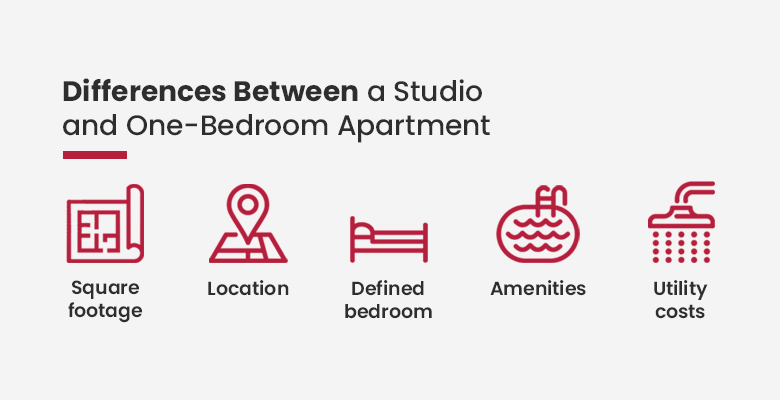
What Are the Differences Between a Studio and One-Bedroom Apartment?
Although the terms are commonly used interchangeably, studio and one-bedroom apartments have some differences, such as:
-
Square footage: The average studio apartment is around 500 square feet but can range anywhere from 300 square feet to 1,000 square feet. One-bedroom apartments have a similar range but a higher average of 750 square feet.
-
Location: Studios are more popular in urban areas with limited space and a higher population. Many urban apartment complexes prefer building studios with smaller square footage. Less-populated suburban areas have more space to spare, so you'll find more one-bedroom apartments.
-
Defined bedroom: The key difference between a studio and a one-bedroom apartment is the presence of a bedroom. Because one-bedroom apartments have more square footage, architects can easily include a bedroom in the apartment layout. Studio apartments don't have this luxury. However, you can use your interior design skills to make space in your studio apartment for a bedroom.
-
Amenities: A studio apartment's limited floor plan doesn't leave much room for in-unit amenities. You'll have the basics — a fridge, some counter space, a shower, a kitchen sink — but you aren't guaranteed much else. One-bedroom apartments are more likely to have convenient appliances like a washer, dryer, and dishwasher.
-
Utility costs: Although residents in a one-bedroom apartment benefit from convenience, having more utilities means having a higher utility bill. Studio apartment residents tend to use less water and electricity. Plus, it requires less energy to heat or cool a studio apartment than a one-bedroom apartment because of the difference in square footage.
The differences are small, but they may influence your final decision of which apartment type is best for you.
How Are Studios and One-Bedroom Apartments Similar?
Besides the few differences, studios and one-bedroom apartments are fairly similar. Both studios and one-bedroom apartments are:
-
Popular for single residents: Compared to the average single-family house, which is around 2,301 square feet, studios and one-bedroom apartments are small. For comfort and functionality, a studio and one-bedroom apartment best accommodates a single resident or two residents if the space is larger.
-
Used interchangeably: Until you break down each characteristic, studio and one-bedroom apartments share many qualities. People often use the two apartment types interchangeably when comparing them to larger housing alternatives, such as townhomes or multi-bedroom apartments.
-
Less expensive than multi-bedroom homes: Multi-bedroom apartments have more square footage to fit extra rooms. With more space comes higher utility prices. Studio and one-bedroom apartments give you just the right amount of space you need with a lower monthly price.
Usually, apartment-hunters first decide they want a smaller housing alternative. Then, they weigh the pros and cons of both studio and one-bedroom apartments and make their final decision based on their capabilities.
The Pros and Cons of a Studio Apartment
Studio apartments are best for single residents with a smaller budget and those who enjoy getting creative with their decorating. Thinking about moving into a studio apartment? Consider the pros and cons.
The pros of living in a studio apartment include:
-
Less expensive: As outlined earlier, studio apartments are less expensive than one-bedroom apartments. Factors that determine an apartment's rent are the amount of square footage, utilities, and other amenities the apartment offers. Because studios have smaller square footage and limited utilities, the costs are lower.
-
Lower utility costs: The monthly rent for a studio apartment is low, as well as the monthly utilities owed. Having limited utilities has its advantages, like needing less energy or water during your daily routine.
-
Simple floor plan: Larger homes can have a maze of rooms to decorate and furnish. Even one-bedroom apartments have extra space and walls to navigate. Studio apartments have a simple, all-in-one floor plan that is straightforward to furnish and live in.
The cons of living in a studio apartment include:
-
Smaller space: Although a studio apartment's floor plan is fairly straightforward, there's less space to perform your daily activities. A smaller space also limits your options for pets and social event hosting. You likely have enough space for the occasional visitor, but hosting a large gathering will prove challenging.
-
Lack of privacy: A studio apartment's open concept doesn't leave much hidden. All your guests can see your sleeping and living area, closet, photographs, and other belongings from almost every angle of your studio apartment.
-
Fewer amenities: As highlighted, a studio apartment's smaller square footage allows for limited amenities.
The Pros and Cons of a One-Bedroom Apartment
One-bedroom apartments are good for single residents or two residents sharing a bedroom who have more room in their budget. Are you leaning toward a one-bedroom apartment? Consider the pros and cons.
The pros of living in a one-bedroom apartment include:
-
Larger space: More square footage means more room for activities. If you're someone who likes to decorate, you may enjoy the extra wall or floor space. The added space allows you to host more people, as well.
-
More privacy: As you're hosting, you don't have to worry about your guests seeing every aspect of your life. An enclosed bedroom allows you to store your valuable and personal items more comfortably. If you're a remote worker, you can also benefit from the mental separation from your work and sleep space.
-
More amenities: Many one-bedroom apartments come with added amenities, like a dishwasher and in-unit washer and dryer. Added amenities make for comfortable living and save you timely and costly trips to the laundromat.
The cons of living in a one-bedroom apartment include:
-
Higher costs: By choosing a one-bedroom apartment, you're going to end up paying more money for more square footage and utilities. With more utilities comes higher utility costs per month. If you have the room in your budget, these higher costs may be worth it.
-
More to clean: One-bedroom apartments give you more room to live in, as well as more space to clean. Some of the added amenities, like a dishwasher and washing machine, make it easier to keep your space clean.
Considering the pros and cons of both options, carefully think about what you can accommodate. When choosing between a studio and one-bedroom apartment, ask the following questions:
1. What's Your Budget?
As you're touring apartments, ask the leasing agents about their income requirements. If you have a larger budget, consider choosing a one-bedroom apartment. Or, you may choose a studio apartment if you want to allocate more of your income to savings or spending money. The right apartment for you depends on your personal goals and capabilities.
2. Where Do You Want to Live?
A one-bedroom city apartment is a lot different than one in a rural location. If you are a person who loves the bustling city and close living proximities, you'll benefit from a studio apartment. Studio apartments are most common in these city areas and can save you hundreds on rent compared to choosing a one-bedroom apartment.
You might have a harder time finding a studio apartment in rural areas. One-bedroom apartments are much more common. You may even spend less on rent for a one-bedroom rural apartment than a city studio apartment compared.
3. How Long Do You Plan to Rent in the Area?
Renting is a good option if you plan on living in an area for a short or undetermined amount of time. If you plan to rent for longer, you may appreciate the extra living space and privacy of a one-bedroom apartment.
If you have a smaller budget for moving, rent, and utilities, temporarily living in a studio apartment may be a good option for you. If you're participating in an internship or a student lease, a studio apartment may fit your temporary lifestyle. You may want to wait until you feel established and familiar with the area to commit to a more expensive one-bedroom apartment.
4. Do You Need More Space?
What is your daily routine like? If you find yourself constantly moving around your apartment or you enjoy having space to work out and stay active, you'll benefit from a one-bedroom apartment's square footage. Studio apartments are best for people who don't mind a more confined environment. With the strategic use of space, you can still have a dedicated movement area, but it's much harder to achieve than with a one-bedroom apartment.
5. Are You OK With Having Fewer In-Unit Amenities?
A washer and dryer are on some people's must-have list. Others don't mind the weekly trip to the laundromat. Some residents don't have the time to manually clean dishes and prefer having a dishwasher.
If you can't imagine a lifestyle without added amenities, a one-bedroom apartment may be the best option for you. Keep in mind that every apartment is different. A one-bedroom apartment isn't guaranteed to have many utilities, while some studio apartments may. Talk to the leasing agent and inquire about the in-unit utilities and complex amenities.
6. Do You Like Cleaning?
Cleaning can be very therapeutic. Some people enjoy their weekend cleaning rituals. Others with busy schedules don't have the time to clean — or they don't enjoy cleaning altogether.
Studio apartments have less space to clean, making cleaning a breeze. On average, one-bedroom apartments have more space to clean, so residents can expect additional cleaning time. If cleaning time is important to you, keep in-unit utilities in mind.
7. How Much Furniture Do You Have?
Take inventory of the furniture you have. Studio apartments require less furniture to decorate and furnish fully. If you add too much furniture, you risk making the apartment feel crowded and less homey. One-bedroom apartments are best for people with a lot of larger furniture because there is more space to furnish and live comfortably.
You also have the option of selling your furniture. You can use the money to buy smaller furniture that better fits into a studio apartment or to cover some of the moving costs.

8. Do You Have Pets?
Talk to the leasing agent about their pet policy. If you choose to live in a studio apartment, larger house pets like a dog may not enjoy the confined space. Certain one-bedroom apartments may be too small for larger house animals, too. Cats, hamsters, and other smaller pets may be a better fit. Pets may feel more comfortable in an apartment with more square footage, making a one-bedroom apartment your best option.
9. How Many People Are Moving With You?
Both studio and one-bedroom apartments are ideal for single residents. If you're moving in with a partner and plan to share a bedroom, a one-bedroom apartment will provide more breathing room and more comfortable living. It's recommended that only one resident lives in a studio apartment for privacy, functionality, and comfort.
10. Do You Like Entertaining Guests?
Are you an introvert? Or, do you prefer going to a friend's house over entertaining guests at your own apartment? If so, a studio apartment is a reasonable option for you. Studio apartments can accommodate the occasional guest but aren't ideal for a large group of guests.
11. Are You OK With Less Privacy?
When you or anyone else walks into your studio apartment, everything is visible. As you're cooking in the kitchen, all your guests sitting in the living room will be an arms reach away. The only real privacy you will have in a studio apartment is in the restroom. A one-bedroom apartment provides much more privacy. If you have a guest overnight, you can comfortably sleep in your bedroom while they relax in the living room.
Some people don't mind the openness of a studio apartment, while some prefer having their privacy.

Property Management, Inc. Can Help Find the Right Apartment for You
If you're in the Pennsylvania area, let our property management professionals at Property Management, Inc. help you find an ideal living space. We have over 50 years of experience in Harrisburg, Williamsport, State College, Reading, and many other areas, and we're dedicated to helping you find the best apartment for you.
Browse our available apartment rentals online. If you find an apartment you love, contact us right from the listing! We'll be happy to share all the in-unit utilities, amenities, pet policies, and any other information.
The post Renting a One-Bedroom vs. Studio Apartment appeared first on GET TO KNOW PMI.
]]>The post Questions to Ask Before Renting a Townhouse appeared first on GET TO KNOW PMI.
]]>Questions to Ask Before Renting a Townhouse
Rent or own? For the past few decades, the number of people who rent a house, rather than own one, has gone up and down. The percentage of rented households dipped to 31% in 2006 but climbed back to more than 36% in 2016.
Although renting a home might not be as permanent a decision as buying one, it is still a big decision to make. You want to know as much as possible about the property and about what you can expect when living in the home before you sign the lease. If you've found a townhouse that looks like it's an excellent fit for your household, be sure to ask a few questions before you sign, so you can avoid any surprises in the months ahead.
From making sure you fully understand the terms of the lease to having a good idea of what the house includes and what you're allowed to bring to the house, here's our checklist of questions to ask the leasing agent before renting a townhome.
1. What Are The Terms of The Lease?
Before you can move into your rental house, you need to sign the lease. And before you sign the lease, you should be sure that you fully understand what it says and what its terms are. Leases tend to be written in legal language, which can be a bit tricky to decipher. It's worth discussing with the landlord or property manager what the lease says and clarifying the terms of the lease so you know exactly what you're signing. A few things you want to be clear on include:
- The length of the contract: How long is the lease for, and what are your move-in and move-out dates?
- How much rent is: The lease should state your monthly rent, as well as when it is due.
- Other deposits or fees: If you have to put down a security deposit, the lease should state the security deposit amount. If you need to pay additional fees, the lease should explain what they are and how much they are.
- The grace period: Your rent is going to be due by a specific date each month, such as the first of the month. Many leasing agents offer a grace period of several days. Your lease should let you know if there's a grace period, how long it is, and what the late fee is if you send in payment after the grace period.
- Notice period: If you get to the end of the lease's term, and you aren't interested in staying in the house, when do you have to let your property manager know? The lease should clearly state how much notice you need to give before the end of the term.
2. What Appliances and Amenities Are Included?
It's also important to understand what appliances come with the house and what amenities are available. Although many rental houses do include appliances such as an oven, refrigerator, or dishwasher, not all do. It's up to you to confirm with the property management company or landlord what appliances they offer. It's also a good idea to find out what will happen if an appliance breaks.
If the house doesn't come with appliances such as a clothes washer and dryer, you might want to ask if laundry facilities are available nearby or if you're allowed to bring your own machines into the house. In some cases, a shared laundry room might available somewhere in the development, or there might be a public laundromat close by.
Rental houses can vary when it comes to the amenities they offer. Garbage pickup and recycling pickup are included in some rentals, but not all. If your lease doesn't include trash or recycling, you'll want to ask what the process is for arranging for pickup.
3. What Utilities Are Included in the Rent?
Water, sewer, heat, electricity — you need these utilities to live comfortably in your house. Depending on the terms of your lease, they might be utilities you are responsible for paying for. Paying for your utilities can add to your monthly costs considerably, so it's essential to ask the property management company what, if any, utilities are included in your monthly rent. You want to avoid the surprise of having a gas bill, water bill, or electricity bill add hundreds of dollars to your monthly living costs.
Along with finding out what utilities you are responsible for and which ones are part of your monthly rent, it's also a good idea to find out how you can go about arranging to pay for your utilities.
4. How Do I Pay Rent?
The townhouse community might offer limited ways to pay your rent. Some still only accept physical payments, such as a check, each month. You might want to look for a rental townhouse that offers multiple ways to pay, for your convenience and peace of mind. Online payments are becoming more and more common and mean that you no longer need to make a special trip to pay your rent or need to hunt around for stamps and an envelope. Property Management, Inc. gives our tenants the option to pay online, which simplifies the payment process. Along with paying online, you can confirm that you made a payment and can review your overall payment history.
5. What Is the Maintenance Policy?
If something in the house breaks during your rental period, who is responsible for repairing it? What is the process for putting in maintenance requests? You want to know the answer to both of these questions before you sign a lease and move into a house.
When it comes to maintenance, you might feel better knowing that the rental company offers around-the-clock service. Before you sign the lease, ask the property manager if there is an emergency number or after hours number to call if there's an issue at your house during the middle of the night or on weekends. It's also a good idea to ask about general maintenance issues. For example, if you have a problem with a sink that doesn't need immediate attention, can you put in a maintenance request online or do you need to call for assistance?
6. What Is the Neighborhood Like?
When looking for a new house to live in, you want to look beyond the boundaries of the home's four walls and beyond the property line. It's also a good idea to understand what the surrounding neighborhood is like and what you can expect when living there.
Think about what you want in your neighborhood and ask the leasing agent if those features are close by. If you have children, you might want a playground or park within walking distance. If you work from home, you might want to be able to escape to a quiet coffee shop or library for a change of scenery from time to time.
If you're not shy, you might want to ask people who already live in the area what they think about it. Your landlord might not be able to give you an as in-depth or detailed idea of the neighborhood as people who already live there. Asking your potential future neighbors about the area helps you make a decision about renting a house, and it can also help to break the ice and make it easier to make friends with people once you move in.

7. Where Can I Park?
If you have a vehicle, one thing you might be particularly interested in learning more about is where you park it each night. It might be that the house you're renting has an attached garage or driveway and you can pull up practically to your front door when parking each day. In some cases, there might be a parking lot outside of the house, and you might be allowed to use one or two spots in front of your home.
If there isn't a driveway or parking lot attached to the property, ask if you'll need to get a permit to park on the street or if there are times when you won't be allowed to park your car on the road. Along with finding out where you can park your vehicles, it might be worthwhile to ask where people who are visiting your house can park. Some townhome communities have designated visitor parking areas, for instance. If that's the case, you'll want to let any houseguests know where they can leave their cars when visiting you.
8. What’s the Security Deposit? Is It Refundable?
It's a good idea to make sure you're clear on how much you need to pay as a deposit and what you can expect when the lease is over. The security deposit is meant to be just that — security in case you cause any damage to the house while living there.
9. Can I Renew the Lease, or Does It Go Month-to-Month?
If you like the townhouse, it can be worth finding out what happens once your original lease is over. Some property managers will send you a new lease, which might be for another year or longer. When you renew the lease, the landlord might raise the rent or make other adjustments to the terms. If you don't agree to the changes, you can decide not to renew and to move somewhere else.
Another common situation is for a one-year lease to convert to a month-to-month agreement if the landlord doesn't prepare or send you a new lease. A month-to-month lease might have some benefits to you compared to a renewed lease or a lease for another full year. If you think you might need to move at some point during the next 12 months, you can get out of a month-to-month lease by giving the landlord 30 or 60 days notice. If you've agreed to another 12-month or longer lease term, you'll need to break the lease to get out of it.
Breaking the lease can be expensive, as you will most likely need to keep paying rent on the house until the landlord finds a new tenant. When asking your landlord about what happens at the end of the lease term, be sure to carefully consider your needs before agreeing to a renewable lease or a month-to-month option.
10. Are Pets Allowed?
Not every rental is pet-friendly, so if you have a dog, cat, bird, or another animal companion, it's a good idea to ask about the rental's pet policy sooner rather than later.
Some landlords or property managers might be more flexible about pets than others. Sometimes a landlord will have a strict no-pets policy. But many will take things on a case by case basis. They might not want you to move in with a 150-pound St. Bernard but will accept a 10-pound cat or a 20-pound dog. Many communities also limit the number of pets in a house, so if you have more than one animal companion, it's crucial to find out how many you can have in your rental.
If you do bring pets to your rental, be prepared to pay a bit more for the privilege. While not every community charges a pet deposit or pet rent, many do. The extra charge for pets might take the form of a refundable deposit, a one-time, upfront fee, or additional monthly payment in the form of pet rent.
Find Your Next Rental House With Property Management, Inc.
Are you looking for a townhouse to rent in Pennsylvania? Property Management, Inc. has rental opportunities in townhome and apartment communities across the state. Take a look at our available listings and get in touch today if you see a home you'd like to tour.
The post Questions to Ask Before Renting a Townhouse appeared first on GET TO KNOW PMI.
]]>The post Questions to Ask Before Renting An Apartment appeared first on GET TO KNOW PMI.
]]>
One of the most important decisions you'll make in life is where to live. Whether you're moving into your first apartment or relocating to be nearer to family, a job, or school, it's a good idea to get the full story on an apartment before you decide to rent it. Asking lots of questions during your search and before you sign a lease may help you avoid any surprises and can ensure that you rent the apartment that is perfect for you. Here's our checklist of the most important questions to ask when renting an apartment.
1. What Is the Lease Term?
When you begin your search for an apartment, one of the first and most important questions to ask a landlord is how long the lease is. A one-year or 12-month lease might be standard, but some apartment communities offer shorter or longer options.
One thing to consider when it comes to the length of the lease is whether or not the apartment community changes the amount of rent it charges based on the lease term. Some communities charge a higher monthly rent for leases that are for less than 12 months.
Along with finding out how long the term of the lease is, it's also a good idea to find out what will happen if you have to break the lease or leave the apartment early. In many cases, moving out before the end of the lease doesn't mean you no longer have to pay rent. Usually, you'll be responsible for the rent on the apartment until the end of the lease term.
2. What Is the Application Process Like?
Although some landlords are more lenient than others when it comes to the process of applying for an apartment, you can usually expect to fill out an application and provide the landlord or property management company with your personal information. If you have found a place you're interested in renting, you want to find out what sort of process the company uses to screen applicants and what information it will be reviewing.
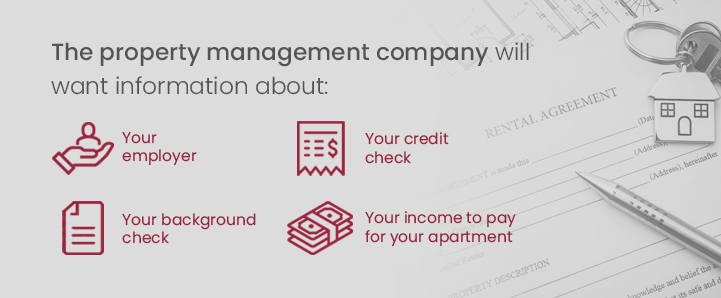
Generally speaking, the property management company will want information about your employer and a list of references, such as past landlords. A credit check and a background check are often part of the application process, too. The property management company will also want to verify your income or that you have the funds to pay for your apartment. If your income isn't high enough, you might need to find a co-signer to apply for the apartment with you.
Another thing to find out when asking about the application process is whether or not you'll have to pay for it. Fees vary based on the company you're considering renting from.
3. How Much Is the Deposit?
When you rent an apartment, you typically need to put down a security deposit. Your security deposit isn't the same thing as your rent, although it's often the same amount as a month's rent. The deposit is meant to give the landlord some protection in case you damage the apartment or fall behind on paying rent.
Since you need to pay the security deposit up front, before you move into the apartment, it's a good idea to ask how much it will be before you get to the point where you're seriously considering signing a lease. You don't want to move through the application process and get accepted only to find out that you don't have enough money to move into the apartment.
4. How Much of the Deposit Is Refundable?
Since your security deposit isn't rent, it remains yours. That means that the landlord should return your deposit to you when the lease is up, and you've decided to move.
There are some reasons why your landlord might not return the full amount of your security deposit to you, though. Before you sign the lease, it's a good idea to ask what factors can affect your security deposit. Landlords can't charge you for things like normal wear and tear on the apartment, but if you caused damage to a fixture or appliance in the rental, they are likely to charge you for it and to take the money out of your deposit.
5. How Do You Pay?
The process of paying rent varies from property management company to property management company and from landlord to landlord. Some companies expect a check mailed to them by the first of the month. Others, such as Property Management, Inc., accept online payments. Paying your rent online can be much more convenient than sending in a physical check. You don't need to make sure you have stamps, and you don't need to worry about having your payment get lost in the mail or stolen. Plus, the process is quick and easy.
Along with finding out what payment methods the company or landlord accepts, it's also a good idea to ask about due dates. The first of the month is an expected due date, but your rent date might be different if you move in in the middle of the month.
While you want to get in the habit of paying on time or before the due date, you might also want to ask if a grace period is available. Your landlord might give you a few days to pay after the due date each month before tacking on a late fee.
6. What Appliances Are Included?
You probably can't imagine living in an apartment that doesn't have an oven, a dishwasher, or a refrigerator. If you've ever lived through a Pennsylvania summer, then you know that air conditioning is a must in some parts of the state.
Just because appliances like a refrigerator, oven, or air conditioner make your life more comfortable doesn't mean your apartment has to come with them. It's common for rental apartments to include those things, as doing so makes for a more attractive rental. But you don't want to assume that your new apartment is going to come with every single appliance you found in your previous location.
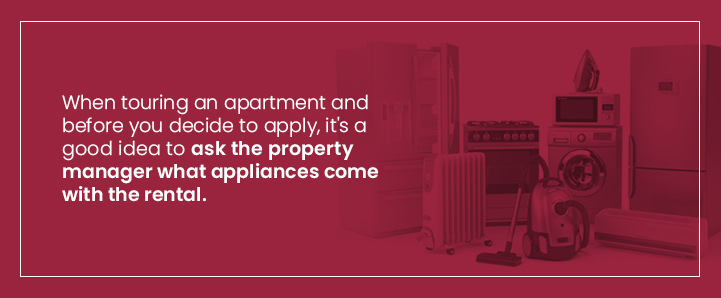
When touring an apartment and before you decide to apply, it's a good idea to ask the property manager what appliances come with the rental. If it turns out that you need to provide or purchase items you consider must-haves, you might decide to continue your search or rent somewhere else.
7. What Amenities Are On-Site?
In some cases, amenities available on the property or in the apartment building can make a ho-hum apartment much more attractive. When you're touring a rental, it's worth asking the property manager what amenities come with the rental. Some properties offer a gym or fitness center, a lounge or rec room, and a pool. Other common amenities may include a walking trail, laundry facilities, community room, or clubhouse.
If you're renting an apartment in a building or at a property that is adjacent to another rental property, you might be able to take advantage of the amenities available at the nearby rental property, too.
Another thing to find out when asking about available amenities is if there is an additional fee to use them. Some rental communities offer a pool or a gym, but charge residents an extra fee on top of their rent to get access to certain features.
8. What Utilities Are Included?
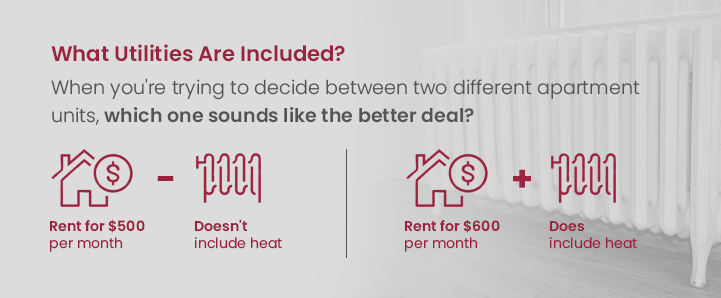
When you're trying to decide between two different apartment units, which one sounds like the better deal? An apartment that rents for $800 per month and doesn't include heat, or an apartment that costs $900 per month and does include heat? Depending on the size of the apartment and how toasty warm you like to keep your home, the $900 per month apartment might be the better bargain.
As you tour apartments and speak to property managers, it's a good idea to ask what utilities, if any, are included in the monthly rent. Some places may include water, sewer and trash pickup in the rent, and some may even offer heat or air conditioning.
If a rental doesn't include certain utilities, such as heat or electricity, you can ask the property manager what the average or typical monthly cost of those utilities is. The exact cost will vary based on usage and apartment size, but having a ballpark figure to work with will help you determine if an apartment's overall price fits with your budget.
9. How Long Does It Take Maintenance Issues to Be Resolved?
When something goes wrong at your apartment, you don't want to have to wait days for the issue to be fixed. Before you sign a lease and move in, you want to ask the property manager how long it takes to resolve maintenance issues or to make repairs.
Some of the things you want to find out include whether the maintenance team responds to issues right away, whether someone is available on weekends, and whether someone is available at all hours of the day.
Along with finding out how long you can expect to wait if your heater breaks or if there's a leaky pipe in your bathroom, it's a good idea to find out what the process is for putting in a maintenance request. Is there a number to call or can you submit a request online? PMI offers tenants the option of putting in maintenance requests online. When you move into the property, you'll also be given a 24/7 phone number to call in an emergency.
10. What Is Your Parking Policy?
If you have a car, where will you put it when you're at your apartment? Some apartment communities offer off-street parking, which takes the hassle out of finding a spot to park every day and also eliminates the worry that you'll get a parking ticket if you don't move your vehicle in time.
Along with finding out if a parking lot or garage is available, it's also worthwhile to learn if parking is included in your rent or if you need to purchase a separate parking pass for your vehicle. If you are going to have visitors over, where will they be allowed to park their cars and will you need a separate visitor's pass for them? Is there a parking lot specifically for visitors?
12. Am I Allowed to Hang Items on The Wall?
Once you move into an apartment, you might be interested in hanging up photos of your loved ones or prints and posters. You might also be interested in hanging up shelving to give yourself a bit more storage space or in painting the walls to put your stamp on things.
Before you make any changes to the apartment, no matter how small, check in with the landlord or property manager and ask about the rules. In some cases, your lease might clearly state what you can and can't do to the walls and fixtures in the apartment. Some buildings are more lenient than others and will let you paint or put in holes in the walls to hang pictures, provided you restore everything in the apartment to its original condition before you leave.
Other apartment communities are stricter and don't allow any holes in the wall or new paint colors. You might be allowed to hang items using removable adhesive, though.
13. Do You Allow Pets?
You may not be looking for a home only for yourself. If you have a furry, four-legged companion or two, it's vital that you confirm that the rental allows pets before you sign the lease.

Asking about pets before you move in also ensures that you and the landlord are on the same page. If you don't mention your dog or cat, and the lease doesn't specifically say anything about pets, there's the risk of some confusion come move-in day or if the landlord happens to drop by and finds evidence of a pet when no pet was ever mentioned.
Another reason why it's worthwhile to ask about pets is that some apartments have pet restrictions. A quiet, fuss-free cat might be allowed, but a loud dog who barks a lot might not be welcome. Some places allow certain types of dogs, but not others. Other places are fine with dogs but don't allow cats. Whatever you do, if you have a pet, you want to make sure that your specific animal companion is allowed to live in the apartment.

14. Is There Pet Rent, a Pet Security Deposit, or Both?
You may need to pay extra to have your pet share your apartment. Ask the landlord if you need to put down a pet security deposit or pay another type of fee to bring your animal into the apartment. It's also a good idea to find out if you'll need to pay extra pet rent each month. Some management companies or landlords charge a one-time, non-refundable pet fee, others charge a monthly rent for pets, and others ask for an additional deposit, which you may get back when you move out, provided your pet doesn't cause too much damage.
Looking for an Apartment in Pennsylvania? Check out PMI's Rental Offerings
Whether you're on the market for a one or two-bedroom apartment, looking for student housing, want to live in luxury, or are searching for a budget-friendly place, PMI has the home that's right for you. We have apartments available throughout Pennsylvania, in Shippensburg, Camp Hill, Williamsport, Mechanicsburg, Gettysburg, Harrisburg, State College, Lancaster, and more. Check out our current listings and get in touch with us today to learn more about what life is like in our apartment communities.

The post Questions to Ask Before Renting An Apartment appeared first on GET TO KNOW PMI.
]]>The post A Guide for Students Living Off-Campus appeared first on GET TO KNOW PMI.
]]>
The decision to live on or off-campus can be a heated debate. Living on-campus puts you in the center of the college experience and within walking distance of your classes, but on-campus life isn't for everyone. Students who decide living off-campus in college is right for them will find there are plenty of benefits.
Depending on your school's student housing options, opting for an off-campus apartment can save you money. Plus, it offers you the freedom and privacy dorm living often lacks. So, are you ready to live off-campus? Here are comprehensive tips for students living off-campus in college.

Finding an Apartment
The prospect of living off-campus is exciting. You get to choose the neighborhood you live in and find an apartment that fits your lifestyle. Before renting an apartment in college, you need to consider several crucial factors.

1. Know Your Budget
More than half of colleges — 60 percent — either overestimate or underestimate the cost of living off-campus. That means you will need to do thorough research to create and manage a budget for yourself. Your budget could include things like income from your job, financial support from your parents, and scholarship funds. You should know approximately how much money you will have to spend each month. Here are seven major expenses to factor into your plans for living off-campus.
- Rent: Rent will probably be the biggest item on your monthly budget. How much of your income can you allocate to paying your apartment's rent? It is a good rule of thumb to put no more than 30 percent of your monthly income toward rent. You still have other expenses to pay besides rent. If you find a beautiful apartment that will put a lot of stress on your budget, it is probably a good idea to keep looking for your off-campus home.
- Security deposit and move-in fees: Some apartments will require a security deposit and/or move-in fee. Others may not have either of those requirements, but you need to be prepared to include that amount in your budget. A security deposit could be as much as one entire month's rent. Keep these two potential costs in mind when searching and budgeting for an off-campus apartment.
- Utilities: Your monthly rent may or may not include utilities. When you are considering an apartment, be sure to ask this question, so there are no surprises. Typical utilities include water, gas, electricity, heating and cooling, trash, and Internet service. The monthly cost of utilities will vary based on location, so you will need to do your research to find out how much you can expect to spend. Each utility is a vital part of a functional home. Make sure you factor in those costs.
- Pet fees: Do you have a dog or cat? You will, of course, need to factor pet care into your budget, but you could also incur a pet fee when you move into your apartment. Some apartment buildings do not allow pets, while others have an open-door policy for four-footed critters. In between, you will come across buildings that have pet fees that work much like a security deposit. Some buildings have monthly pet fees you will need to pay in addition to your base rent. Always ask about an apartment building's pet policy. In addition to fees, some buildings may have breed or species restrictions.
- Laundry: When you live in a college dorm, laundry is sometimes included in your overall cost of boarding. When you decide to live off-campus, laundry becomes your responsibility. Many apartment buildings have coin-operated washers and dryers. It usually costs a few dollars to wash and dry a load of laundry. You will need to remember to stock up on quarters. You may find an apartment with an in-unit washer and dryer, which means you can forget about quarters. However, this will contribute to your water bill if you live in an apartment where you pay for that utility.
- Parking: Do you drive a car? Some apartments have paid parking spots that offer a convenient and close spot to leave your car. Be sure to ask about that when you are on the hunt for an apartment. If you don't drive, you might need to pay for public transit to and from campus, depending on how far you live from your classes.
- Food: A meal card is one of the perks of living on-campus. You can swipe that card multiple times a day and grab ready-made meals at almost any time of day. Like laundry, meals become your responsibility when you live on your own. When you are considering apartment options, find out the location of the nearest grocery store. Then, think about how much it will cost to feed yourself three meals each day.

2. Do Your Due Diligence When Selecting an Apartment
Once you have set your budget, you can narrow down your apartment search. But your budget isn't the only factor that matters. Here are few apartment features to evaluate.
- Size: You do not need the biggest apartment when you are a student, but you do want somewhere you will feel comfortable. Additionally, you want to ensure you are not overpaying for an undersized apartment. Go online to check out the average size and price of apartments in the area you are hoping to live. Compare those statistics to the size and rent of any apartment you consider.
- Walkthrough: Before signing any paperwork, you will want to do a walkthrough of the entire apartment and check that everything works. Do the lights turn on and off? Does the toilet flush? How is the water pressure in the shower? Do the locks work? Do the appliances that come with the apartment work? Is there any sign of bugs? Are there enough outlets, and do they work? You don't want to move into an apartment only to find a bunch of things in your new home are in dire need of repair.
- Amenities: Just because you are on a budget does not mean you can't look for apartments with amenities. Does the apartment have air conditioning? Check for that in-unit washer and dryer. Ask the leasing agent if there are any perks that come with renting the apartment. For example, a building might have a gym open to residents.
- Check your commute time: Whether you are driving, walking, or taking public transportation, you need to know how long it will take you to get to class and work. Commuting can eat up a lot of your time and your budget. Try a couple of test runs between the apartment and campus to get a good idea of how much you can expect to spend on the go.
- Lease duration and details: When you have found an apartment you want to snag, take time to read the fine print before you commit. Your apartment's lease will contain all the details about the rent amount, how to pay, the length of the lease, and any restrictions. Twelve months is the typical length of an apartment lease. Are you planning to live there for an entire year, or just the duration of the school year? Know the answer to that question before you sign. If you only want a nine-month lease, talk to your leasing agent and try to negotiate that. Breaking a lease can be costly and damage your chances of finding an apartment next time.

Packing and Shopping for Off-Campus Life
Now you have tips on how to rent an apartment as a college student. Once you have signed the lease, you can start thinking about your move-in date. Are you paying for movers or a moving truck, or will you be recruiting family and friends and their vehicles? Have a plan in place to get all your belongings from home to the new apartment, which brings us to your packing list. Here are a few college apartment tips that will help you make sure you have everything you need.
1. Bring What You Can From Home
It can be tempting to buy all-new things when you are moving into a new apartment, but remember, you still need to live on a budget. Look at the things you own at home when you are packing. Of course, you will want to pack basic things like clothes, your computer, and toiletries. When it comes to getting items you may not already own, ask your family. For example, do they have kitchenware they don't need anymore?
You will also want to take into consideration the duration of your lease when putting together your packing list. Will you be living in your off-campus apartment for an entire school year or more? Or, will you be making frequent visits home and living there between school years? If you are staying at the apartment for a 12-month lease or longer, you will want to pack the majority of your belongings. If you are living there just for the academic year, you can pack a bit lighter, which will make the move back home easier.

2. Remember You Might Need to Supply Your Own Furniture
On-campus dorms usually come with basic furniture: a bed, a nightstand, a desk, and a dresser. It is possible you will be able to find an apartment that is already furnished, but most apartments come unfurnished. Once again, check what pieces you can take from home to furnish your apartment. Try not to leave furniture until the last minute, so you can avoid living in a bare apartment.

3. Consider the Space You Have
When you are packing your things and buying new items for your apartment, remember the square footage of your new home. Can you fit a new flat-screen TV? Will that king-sized bed fit in the bedroom? Packing for the size of your apartment will help you make sure all your things fit. Plus, you can avoid packing unnecessary items that will end up making your new home feel cramped. If you have a studio apartment, you will have limited space. If you have a larger apartment with roommates, you need to remember you will be sharing common space in the apartment.
Quick tip for anyone living with roommates: Ask them what they are bringing. That will help you avoid having duplicates of things like microwaves and couches. Here is a look at some of the basics you may need for the rooms of an off-campus apartment.
Bedroom
- Bed frame
- Mattress
- Nightstand
- Bedside lamp
- Closet hangers
- Laundry basket
- Wastebasket
Living room
- Couch
- End table
- TV
- DVD player/gaming system
- Floor lamp
Kitchen
- Dishes
- Utensils
- Pots and pans
- Microwave
- Dish detergent
Bathroom
- Toilet paper
- Toiletries
- Shower liner and curtain
- Wastebasket
- Towels

Living in an Off-Campus Apartment
Once you have found out how to get an apartment in college, you will need to figure out how to live in one. Here are some basic guidelines to help you navigate the ins and outs of living in an off-campus apartment.
1. Keep Your Kitchen Stocked
Remember how we talked about food being part of the budget? Well, grocery shopping for yourself can be a tough transition for a lot of college students. When you live at home with your family, you are probably used to finding a fully stocked pantry and fridge, if not having your meals made for you. Start out by buying yourself basic staples, such as salt, pepper, and flour. From there, you can make yourself a weekly grocery list that covers your meals for the week. Try to stick to your list and shopping schedule, so you don't find yourself in the middle of a study session with an empty kitchen. It can be helpful to meal prep, so you have food ready to eat throughout the week. Plus, this trick helps reduce the amount of food you waste.
2. Set Roommate Ground Rules
Living with roommates in an off-campus apartment means you are sharing space, expenses, and schedules. This might seem like nothing new to people who grew up sharing everything with siblings, but it can be a bit jarring for some college students. Whether you are friends with your roommates or you are just meeting, you can avoid a lot of squabbles by putting down some basic ground rules.
- Shared space: Roommates share the kitchen, living room, and bathroom of an apartment. That means everyone is responsible for the cleanliness of those rooms. Set basic expectations for how clean those rooms should be and split up chores. If one person ends up picking up after everyone else, roommate tension is inevitable. Likewise, you will need to coordinate use of those shared rooms. What time does everyone need to shower? What time is everyone going to cook their meals? How often can one person use the couch and TV in the living room?
- Shared expenses: Rent and utilities are obviously going to be a shared expense among roommates. Determine who will be in charge of paying those expenses and find a way to ensure everyone is pitching in their fair share. Beyond those two costs, you and your roommates will need to decide what else is a shared expense. Do you each pay for your own food? How about things like toilet paper and toothpaste?
- Guests: This issue can cause a lot of roommate disagreements, especially when quiet time for studying is essential. How often can each roommate have guests over? Is everyone comfortable with overnight guests?
3. Keep Track of Your Bill Due Dates
Living in an off-campus apartment means you have to juggle several separate bills. You need to pay for rent, Internet service, and any other utilities not included in the cost of rent. Forgetting to pay any of those bills can mean a utility gets shut off, and it could also affect your credit score. Avoid that issue by knowing your bill due dates. If you are forgetful, most utilities allow you to set up autopay.

4. Be a Considerate Neighbor
You probably do not want to deal with loud music and rowdy neighbors while you are trying to study or sleep. The same goes for your neighbors. Dorms have RAs to help keep noise in check and mediate disputes between residents. Off-campus apartments do not have that perk. Your neighbors might be fellow college students who don't mind late nights, but they might be people who have to get up for work the next day. Keep an eye on how much noise you are making when you blow off steam after a long week or a big test. If a neighbor asks you to quiet down, respect that request.
5. Use Your Freedom Wisely
The freedom that comes with living off-campus is one of the biggest benefits. You do not have to answer to a dorm's restrictions, such as hall meetings or mandatory quiet hours. Just remember, this freedom comes with responsibility. You still need to study for your classes. You need to pay rent and all your bills on time. You need to get along with your roommates. Balance your newfound freedom with the adult responsibilities of maintaining life in an off-campus apartment.
If you have decided to live off-campus while you attend school in Pennsylvania, PMI can help you find an apartment with the right budget, location, and amenities so you can focus on your academic career. Visit our student housing page to see our apartments available for rent in Shippensburg and State College, PA!

The post A Guide for Students Living Off-Campus appeared first on GET TO KNOW PMI.
]]>The post Getting an Apartment as a College Student appeared first on GET TO KNOW PMI.
]]>But all good — and terrible — things must come to an end, and the dorm room experience is no exception. You’ve decided it’s time to abandon the tiny double room and public bathrooms of your college dorm and instead rent a place with your friends. Easy, right?
 Not so much. No matter how many classes you’ve taken on gender studies, research methods, and abnormal psychology, there never seems to be a class on really useful life skills. No one sits you down and teaches you how to pay your taxes, how to recognize when a car salesman is trying to scam you — or, in this case, how to rent an apartment as a college student.
Renting as a student can be a complicated process with a lot of technical ins and outs no one prepares you for. That’s why we’ve put together this comprehensive guide to tell you everything you need to know as you begin this process. We’ll try to answer the most pressing questions you might have and teach you the top apartment renting tips and tricks to keep in mind as you begin browsing nearby apartment listings.
Don't Wait to Look for a College Apartment
Here’s the thing about college towns — rentals go fast. Really fast. Even if you go to a small school, think about the sheer number of students who are going to be looking for rentals within a few miles of the school. If you go to a large school, this becomes an even bigger problem.
If you decide to wait until a week or so before school begins, you probably won’t be able to find an apartment. And if you do, it will be one everyone else has already passed on — either because it’s too expensive, it’s in a bad neighborhood, or it has insulation falling out of the holes in the ceiling.
If you’re looking for an apartment to move into in September, start looking right after your school’s graduation the previous spring, when many apartments will open up thanks to the mass exodus of graduating seniors. If you’re looking for an apartment to move into at the beginning of the spring semester, start looking during the fall.
A great way to begin your search is to drive or walk around the nearby neighborhoods, taking note of which areas you prefer. Additionally, you can talk with other students you know who are already renting. If they’re going to be leaving their current apartment, they might just be willing to let you know or to put in a good word with their property manager. They also might be able to tell you if their property manager has other properties for rent.
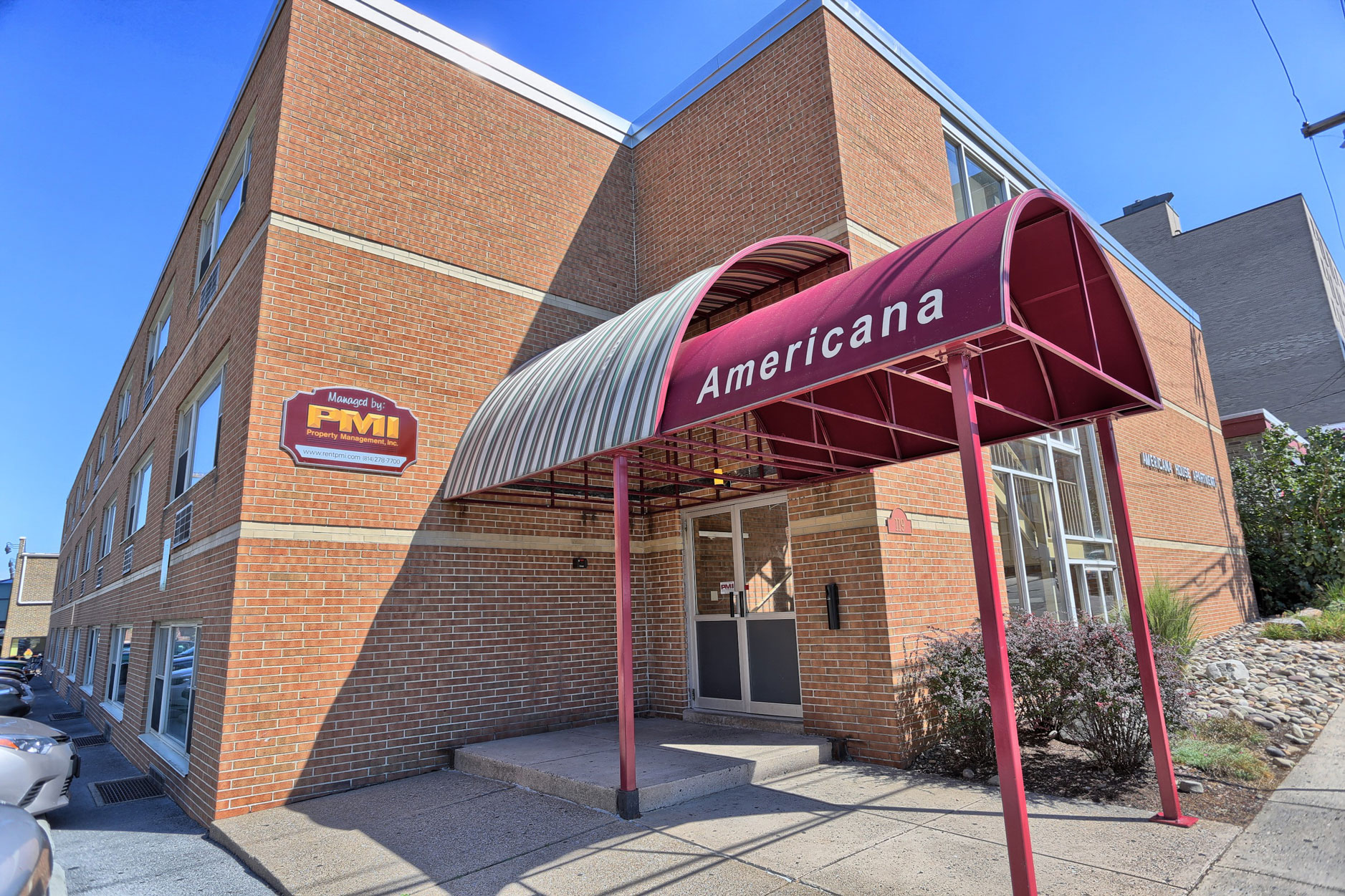
You can also check for property listings online. If you are searching for a property lister near Penn State University, you can browse PMI's comfortable rental listings.
Decide on a Budget for Your College Apartment
Getting an apartment as a college student will require you to budget your expenses. Maybe you have already made a budget — if so, good for you! If not, this step is absolutely essential before you begin renting your first apartment. For many students, this is their first experience with budgeting. As intimidating as it might seem, it’s absolutely crucial to your success as a renter and as an adult.
 Add up how much you spend on things like gas, food, textbooks, and other necessities, as well as any fixed payments like car insurance, health insurance, or any loans you’ve started to pay off. Designate a chunk of money you can allow yourself to have fun with — to go shopping, out to eat, to the movies, or any other activity. Decide how much you want to save each month.
Once you’ve done all this, look how much money you have left. This amount is how much you can spend on an apartment every month. Keep in mind that this figure doesn’t just include rent. It will also include any utilities that aren’t included in the rent, such as water, electric, trash, or sewer.
Compare your budget to the average prices of apartments in the area, and make adjustments to your budget as necessary. Determine which neighborhoods and which apartment sizes fit into your budget.
Renting a House or Apartment With Friends
You probably want to rent a house or an apartment with friends because it helps save money and allows you to hang out with your favorite people more. While this is a great way to rent while you're in college, there are some things you can do to ensure it's a smooth process. Before renting a house or apartment with your friends, consider the following tips:
Make Sure Everyone Agrees on the Apartment
Before signing a lease, make sure everyone who will be living in the home has a chance to walk through it or atleast take a virtual tour. You can even have everyone decide which room will be theirs to avoid confusion or disagreements on move-in day. Making sure everyone agrees on the house or apartment will help prevent any hard feelings in the future. It's also important to make sure everyone will be able to handle their share of the rent of utilities before deciding on an apartment. Some student housing management companies offer leases by the bedroom for student apartments.
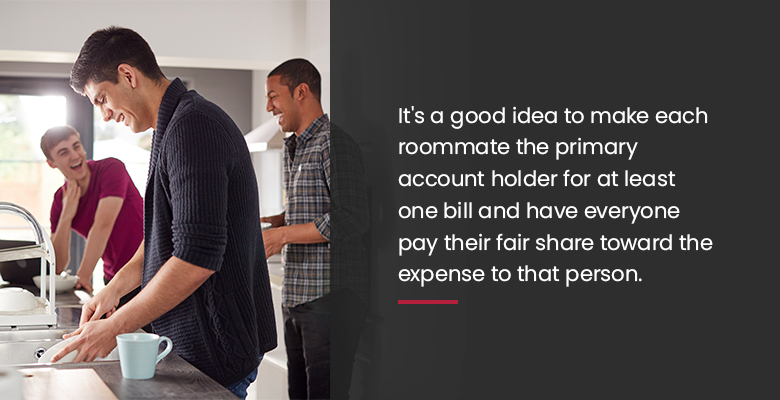
Decide How to Split Costs
Rent and utilities are more manageable when you can split them between two or more people. However, it's important to decide how you and your friends will split costs once you move in together. It's a good idea to make each roommate the primary account holder for at least one bill and have everyone pay their fair share toward the expense to that person. This will ensure that one person is not responsible for all of the bills.
Additionally, if someone wants to take the largest room in the apartment or a room with an attached bathroom, they might be willing to pay a little more on the rent than everyone else in the house. If one friend primarily takes online classes and uses a lot of electricity throughout the day, they might be willing to pay a little more towards the electric bill than everyone else.
You should also talk with your friends about splitting grocery bills. You can keep your grocery bills separate and agree that everyone will take care of their own groceries, or you can purchase groceries together and split one bill. If everyone shares food in the apartment, splitting the bill may be the best option.
Set Rules Everyone Agrees on
Each of your friends may work different schedules, so make sure everyone can respect sleep schedules and keep the noise down when needed. It's also important to set cleaning schedules or expectations so everyone pulls their weight when it comes to maintaining the space.
Make a Checklist for Your College Apartment Visit
Picture this. You’re at an apartment visit, and the property manager shows you the coolest window seat you’ve ever seen in your life. You’re so thrilled by it that you put a deposit on the place right then and there. It’s not until after you move in that you realize the place has no laundry units and hardly any storage space.
It’s important to spend some time thinking about what you want in an apartment. What are absolute essentials that you’re not willing to compromise on? For example, you might need a certain number of bedrooms, or you might want to be within a five-mile radius of your school.
Next, make a list of the things you’d really like but don’t absolutely need. Some examples here might be a dishwasher, an extra half-bathroom, or a ground-floor location.
It doesn’t matter if your list is all in your head or a physical list you bring with you. Once you’re armed with lists like these, you can be more informed about your needs and wants when you go on apartment visits and tours. You can come prepared, knowing which things to look for and which questions to ask. You’ll never be so enthralled by a novelty feature that you forget your basic essentials.
You also might make a checklist of questions you want to ask every potential property manager. Some questions to include on such a list might be, “Are any utilities included in the rent? Are all the appliances in good working order? Who is responsible if the stove breaks or a pipe bursts?”
Visit Multiple College Apartments
You’ll often hear people say you shouldn’t marry the first person you ever date. After all, you don’t know who else is “out there.” How do you know the first person you’re with is the one if you have no one to compare them to?
Whether or not you believe that’s true, this principle is very applicable when it comes to apartment hunting. You might think you absolutely love the first place you visit. But it’s also possible you’re just overwhelmed with happiness at the prospect of having your own bathroom, a bedroom to yourself, and a kitchen that has more than a microwave and a mini-fridge.
You owe it to yourself to check out at least two or three apartments. Give yourself options to compare. Maybe it will turn out your first visit really was perfect. But either way, it’s worth seeing your options.
Don't Limit Yourself to Apartments
While apartments might be the first thing you think of when you think about renting, they aren’t the only option out there. Most towns and cities also have a wide selection of houses available for rent. There are also hybrid options, such as a single house that’s been subdivided into two or more apartments. Depending on your location, there are also options like townhouses or rowhouses.
Let’s look at a few pros and cons of houses vs. apartments.
Off-Campus Apartment Pros
- Fewer roommates are required to pay rent.
- Less responsibility for outdoor and household maintenance — a maintenance worker will usually take care of these things.
Off-Campus Apartment Cons
- You have to share spaces such as a laundry room and lounge.
- There is a higher potential for noise from neighbors.
- There are shared spaces in the building such as hallways and stairwells.
Off-Campus House Pros
- Houses usually have more space.
- You will have more privacy — for example, you won't have neighbors you can hear through walls.
- You will have a private washer and dryer.
- The lproperty manager will be more likely to allow pets.
Off-Campus House Cons
- More roommates are required to pay rent.
- More outdoor and household responsibilities, such as mowing the lawn and shoveling snow.
Pay Attention to the Whole Apartment Complex
Even though you’ll undoubtedly pay the most attention to the individual apartment you’re touring, don’t forget to look at the entire apartment complex as a whole. Whether it’s a multi-story apartment building, a row of houses split into apartments, or some other situation, it’s always worth it to be aware of how well they’re maintained.
Be Wary of Housing Scams
It’s unlikely you’ll encounter something like this, but it’s always best to be prepared. Because most property listings occur online, it’s only too easy for someone to grab photos of a random, nice-looking house and try to pass it off as a real rental they own. If you seem young and inexperienced, you may be a particular target for these types of scams.
Some warning signs of a scam include:
- Prices that seem too good to be true or are inconsistent with the neighborhood and size/quality of the property
- Endless excuses as to why you can’t visit the property
- Requests to receive payment before you’ve seen the property
- Odd grammar mistakes or broken English in the rental listing
Visit Any Potential College Apartments at Night
One of our most important tips when renting an apartment is to visit a rental property at different times of the day. Any apartment can easily pass as cozy in the daylight. The sun is shining, there are plenty of cars driving by, and there might even be kids playing in a nearby park. But no matter how much you like an apartment during the day, drive by it again at night and take a good look at the neighborhood.
If it looks the same at night, that’s great. But many neighborhoods that look good during the day become unsettling at night. As you drive past your potential apartment in the dark, ask yourself if you would feel comfortable walking down this street at night by yourself. If your answer is no, you may need to seriously consider looking for a different apartment.
Be Ready to Make Your Deposit on the Spot
As we’ve mentioned, competition for apartments near colleges is fierce. Imagine this scenario. You visit an apartment and love it but decide to take a day to think about it — to be sure you’re making the right decision. The next day, you call the leasing agent up and announce you’ve decided to take it. There’s just one problem: In the day you took to think about it, someone else snatched it up.
When you go to apartment viewings, you have to be ready to put down a deposit right away. If you love a place and feel confident in it, don’t be afraid to put down the deposit right then and there. Always bring your checkbook to events like these for this very reason.
When you do fill out an application or sign a lease, you may also need to provide copies of certain documents and information.
You may need:
- Your Social Security number
- Any previous renting history
- Personal references
- Proof of income such as bank records or paystubs
- Credit score — If you don’t have acredit score yet, you may need to bring information for a cosigner.
Talk About the Length of Your College Apartment Lease
Technically, a lease can be for any amount of time. Most commonly, though, leases are for one of the following durations:
- One year
- Six months
- Nine months
It’s important to talk with your landlord or apartment leasing office and discuss which option works best for both of you. While this isn’t a hard-and-fast rule, many leasing agents and property companies will rent at a lower price if you agree to rent for longer. They don’t want the hassle of putting the place back on the market after only a month or two. That means they’ll often try to make it worth your while to rent for longer. If they don’t make such an offer upfront, you might propose it yourself.
Read Everything Before You Sign It
Yes, the lease might be 10 pages worth of tiny print and technical jargon. It doesn’t matter. You still have to read it. If there’s anything that still seems murky or confusing after you’ve read the lease, ask a parent, a trusted mentor, or perhaps a friend who majors in technical writing. Ask them to walk you through the document, and then thank them profusely afterward.
Thanks to the internet, we live in an age where most of us blindly click the “Yes, I Agree” box without even bothering to read the thousands and thousands of words in the terms of service. You probably do this every day and never think twice about it. However, your lease is different. You need to read through it carefully and know what you’re legally binding yourself to.
What is the penalty for breaking the lease? What does it say about late fees for your rent? What does it say about who is responsible for anything damaged within the apartment? What does it say about starting a business from your home? The list goes on and on.
Check Out PMI’s Rental Properties For Students
There are many factors to consider when renting an apartment in college, but it’s not impossible! If you’re going to school, have a summer internship or are otherwise interested in renting in Central Pennsylvania, we hope you’ll consider our comfortable rental properties in State College. Use our off-campus housing services to find your college house or apartment. If you have any questions, we would love to hear from you at 717-730-4141.
The post Getting an Apartment as a College Student appeared first on GET TO KNOW PMI.
]]>